Technology & Products
UPS and ESS: What’s Different?
2026.09.01
|
□ UPS instantly supplies power during a blackout □ ESS stores electricity for use when needed □ SAMSUNG SDI offers high-power UPS batteries and high energy density ESS solutions |
If a blackout suddenly strikes, how can data centers keep running? And what equipment is needed to use solar power generated during the day, at night?
Batteries can address both concerns—the systems simply differ depending on their purpose. Let’s dive into the UPS(Uninterruptible Power Supply), which ensures a seamless power supply during a blackout, and ESS(Energy Storage System), which stores energy for use when needed.
UPS allows zero downtime
UPS is a system designed to protect facilities by rapidly supplying power in situations where even an outage or voltage anomaly lasting just a few seconds can result in significant losses, such as data center servers.
When a blackout occurs, the system must deliver energy within milliseconds and briefly maintain power until an emergency generator becomes operational. For this reason, rapid power output, long lifespan, and outstanding safety in emergency situations, rather than large storage capacity, are the primary requirements for UPS batteries.
SAMSUNG SDI’s UPS batteries use LMO(Lithium Manganese Oxide)-based materials to maximize power output, ensuring a lifespan of up to 15 years. The battery also became the first in the world to meet every evaluation standard in the Indoor LSFT(Large Scale Fire Test), proving its superior safety.
With this technological edge, SAMSUNG SDI has consistently maintained the No.1 battery market share in high-power UPS solutions.
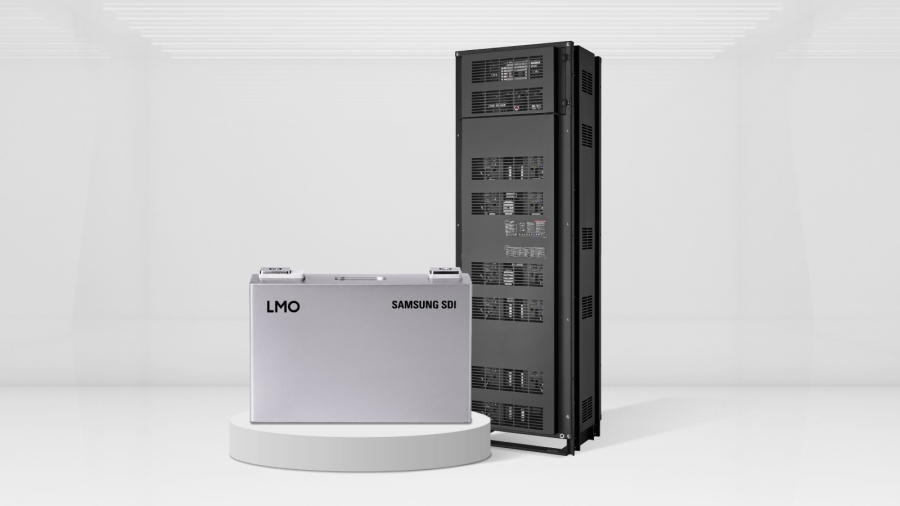
[SAMSUNG SDI’s UPS battery solutions]
ESS stores energy for use when needed
ESS stores surplus power and releases it when needed. The system supports the efficient use of renewable energy such as solar and wind, and helps alleviate power load during peak demand—ultimately improving the power grid’s operational efficiency.
While UPS is built to respond to brief emergency power loss, ESS focuses on how much stored energy can be discharged(used) over time. As a result, ESS batteries require larger storage capacity than UPS batteries, and their core strength in high energy density—packing more energy into the same space.
SAMSUNG SDI’s high energy density technology allows more power to be stored in the same footprint, reducing the installation space required for ESS and improving operational efficiency.
SBB, an ESS solution that incorporates this technology, packages components like battery cells, modules, and racks into a 20-foot container ready for immediate use once connected to power. The lineup includes SBB 1.5 and SBB 1.7, which feature NCA(Nickel, Cobalt, Aluminum) cells and SBB 2.0 that adopts LFP(Lithium, Iron, Phosphate) cells—meeting a wide range of customer needs.
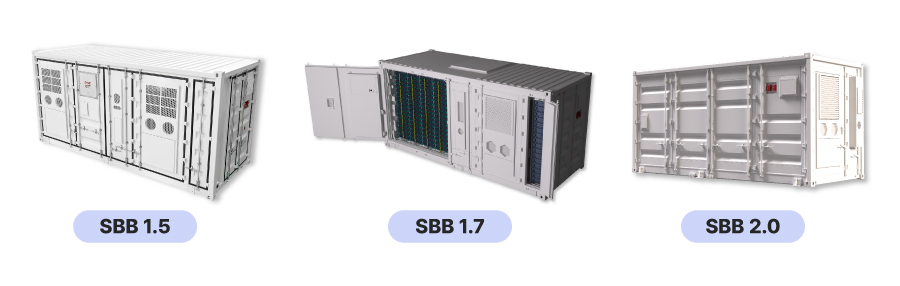
[SAMSUNG SDI’s SBB lineup]
Both UPS and ESS rely on battery technology, though UPS is designed to provide stable power during an outage, while ESS is focused on optimizing energy utilization. By leveraging differentiated battery technology across both UPS and ESS sectors, SAMSUNG SDI will continue to play a leading role in the energy market.

SAMSUNG SDI Newsroom
We deliver the latest news and issues coming out of SAMSUNG SDI.