Technology & Products
SAMSUNG SDI’s Highest Energy Density Battery Wins InterBattery Award
2026.03.03
SAMSUNG SDI’s high-energy prismatic battery has won the InterBattery Award, achieving a hign energy density of 700Wh/L for prismatic cells. This battery delivers 800km range on a single charge and features fast-charging capabilities with top-tier output performance, setting a new standard for next-generation EV battery technology.
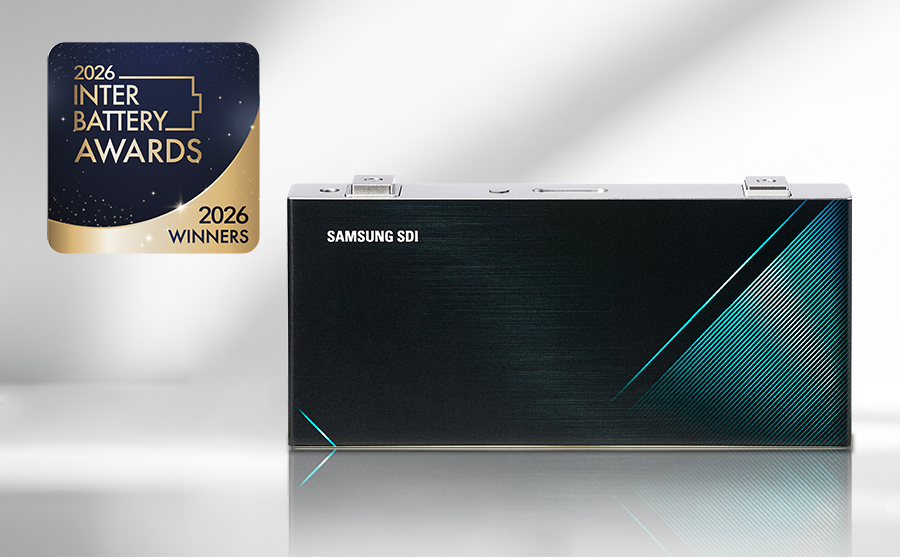
[Winner of the 2026 InterBattery Awards: SAMSUNG SDI’s 700Wh/L high-energy prismatic battery]
Achieving such industry-leading performance required innovation in both battery structure and materials. We explore the journey through the stories of SAMSUNG SDI employees who led the development.
Direct-connect current collection structure maximizes energy efficiency
To achieve such high energy density, SAMSUNG SDI adopted a direct-connect *current collection structure for its prismatic batteries. By simplifying the complex structure of conventional collection methods, this system connects directly to the electrode plates. This reduces the number of required components, freeing up internal cell space to accommodate more active material and boost energy density. It also lowers electrical resistance, which enhances fast charging capability and high-power performance.
*Current collection: The process of gathering electrical current and transmitting it outside the cell
Pro Jungho Lee at Lab, who was in charge of the development, explained, “The 700Wh/L cell was designed to be thin, which presented the challenge of maximizing internal space. To increase the energy density without compromising charging speed or output, we adopted the direct-connect structure.”
Improved capacity and lifespan via 91% nickel cathode and third-generation SCN anode
Material technology was also enhanced. The newly developed cell utilizes an NCA cathode with 91% nickel content. While increasing nickel content boosts energy density, it can also make the cathode surface prone to cracking during charging and discharging, complicating the manufacturing process. To address this, SAMSUNG SDI introduced a new structure design to ensure stability and extend the battery’s life.
For the anode, a third-generation SCN(Si- Carbon-Nanocomposite) was adopted. SCN combines silicon with carbon to achieve high capacity. Pro Mi-Rae Choe at AEB, who was involved in the cell development, stated, “Compared to second-generation materials, this third-generation SCN reduces graphite content and create a denser internal structure. This minimizes electrolyte penetration into the material, which suppresses anode expansion and ensures a long cell life.”
SAMSUNG SDI’s proprietary safety technology for prismatic batteries was also applied. These batteries are highly resistant to external shocks due to their rigid aluminum can design. Notably, they feature an industry-leading fire safety by incorporating No TP(No Thermal Propagation) technology and a gas vent.
Developing this technology represents a journey of overcoming numerous challenges to realize a battery that meets performance target. “We often faced unexpected issues while bringing the high-nickel cell (with 91% nickel) and third-generation SCN from initial development to mass production,” Pro Jungho Lee shared. “I’m pleased that we could enhance the development maturity by deeply engaging with colleagues to solve the problems together.”
Pro Mi-Rae Choe added and shared her resolve, “I’m proud of successfully adopting the direct-connect current collection structure in prismatic cells. As we’re soon entering the mass production, I want to give it my all right to the end.”
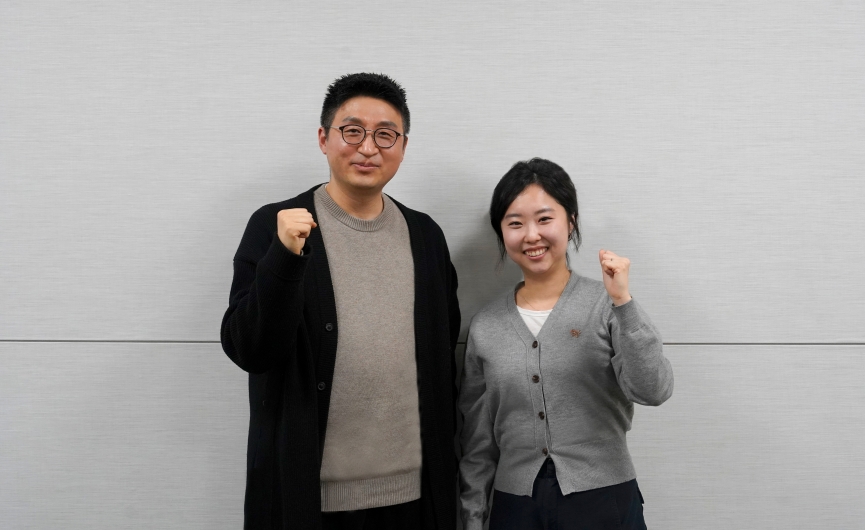
[Pro Jungho Lee and Mi-Rae Choe dedicate their utmost effort for successful mass production]
SAMSUNG SDI will continue to innovate in high-energy battery technology, aiming to further strengthen its competitiveness in the market.

SAMSUNG SDI Newsroom
We deliver the latest news and issues coming out of SAMSUNG SDI.