Technology & Products
[BoT] Batteries for All Applications, AI Data Center
2026.01.15
|
The era of ‘BoT (Battery of Things)’—where batteries become the core of everything around us—is drawing near. From robots and IT devices to electric vehicles, batteries already serve as the driving force behind countless machines. |
With the expansion of AI, the demand for data centers is growing rapidly. To support large-scale computing, data centers operate a vast number of servers 24/7, which necessitates a continuous and stable power supply. Against this backdrop, Energy Storage System (ESS) is gaining attention as an essential solution for ensuring power reliability.
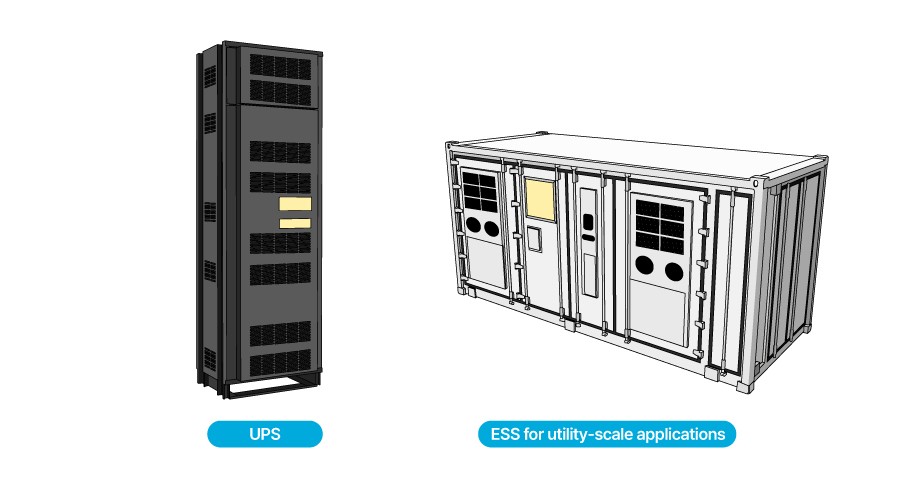
[UPS and ESS for utility-scale applications, batteries for data center to supply power]
There are two primary types of ESS used in AI data centers. One is Uninterruptible Power Supply (UPS), which ensures server stability during outages, and the other one is utility-scale ESS, which supplements the power during peak load times.
AI data centers use UPS systems to provide instantaneous power supply during sudden outages, enabling uninterrupted server operation. Moreover, UPS is increasingly being utilized to address ‘AI-driven load spikes’—sudden surges in power consumption that occur as data centers manage massive data throughput and advanced computing tasks.
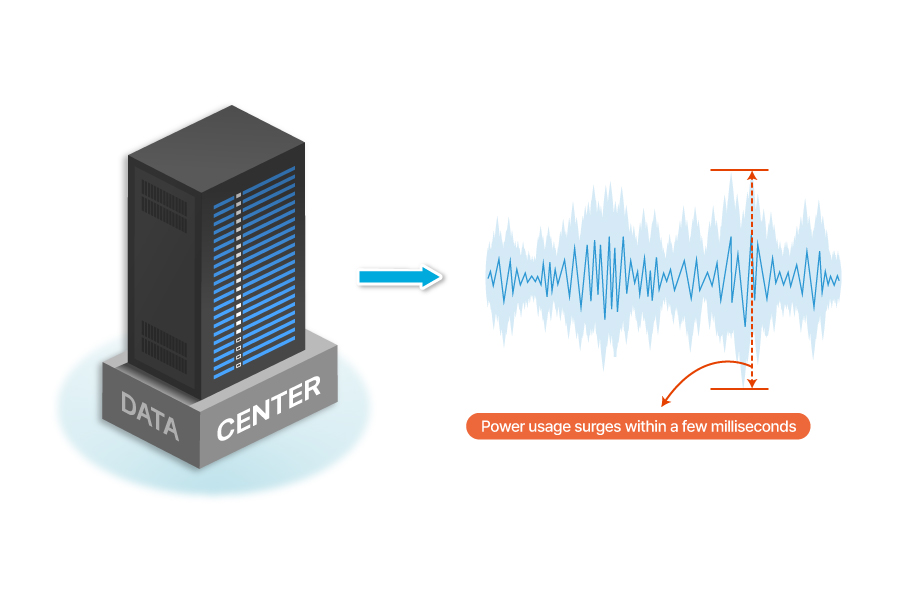
[AI data centers experience AI-driven load spikes, with power consumption surging within miliseconds.]
For a UPS to respond reliably to outages and AI-driven load spikes, battery technology featuring high power output and a long lifespan is essential. Even in short-cycle charging and discharging environments, UPS must maintain consistent performance and longevity while ensuring instantaneous power supply. SAMSUNG SDI’s batteries utilize LMO-based materials (LiMn2O4) to maximize power output, and achieved a long-lifespan performance of up to 15 years.
Leveraging this technological competitiveness, SAMSUNG SDI has maintained the No. 1 market share position in battery industry. It continues to develop UPS batteries optimized for AI data centers to take the lead in the market.
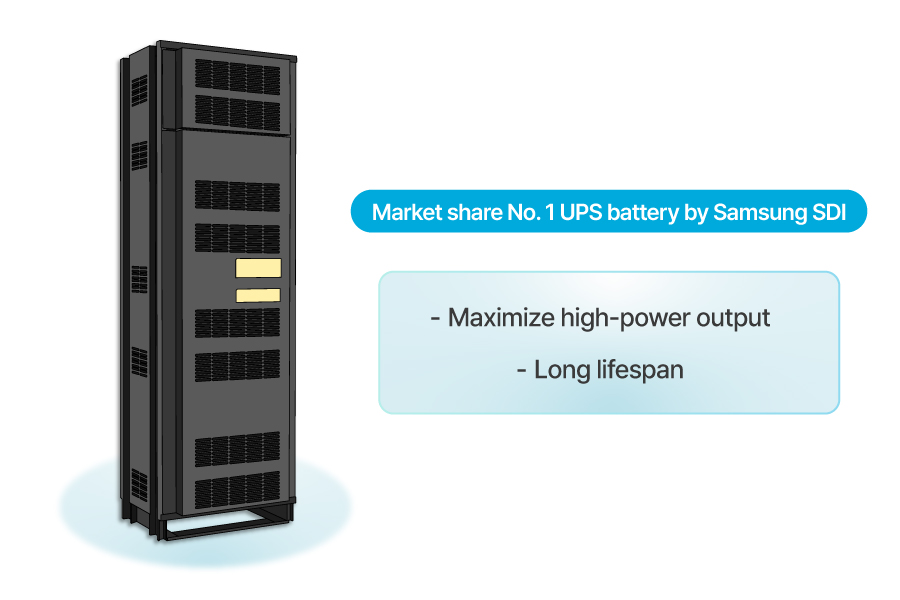
[The strength of SAMSUNG SDI's UPS battery]
While UPS play a role in short-term power stability, utility-scale ESS provides power back-up that expands the operational range of a data center by bridging gaps in the traditional grid. Increasing grid capacity through conventional power stations takes significant time. However, the simple installation of an ESS allows for a rapid increase in supplementary power capacity, greatly enhancing a data center’s operational efficiency.
The primary performance of utility-scale ESS batteries is defined by energy density and price competitiveness. SAMSUNG SDI uses high-energy density technology, which allows for storing and supplying more power than competitors within the same footprint. This increases both the efficiency and cost-effectiveness of data center operations.
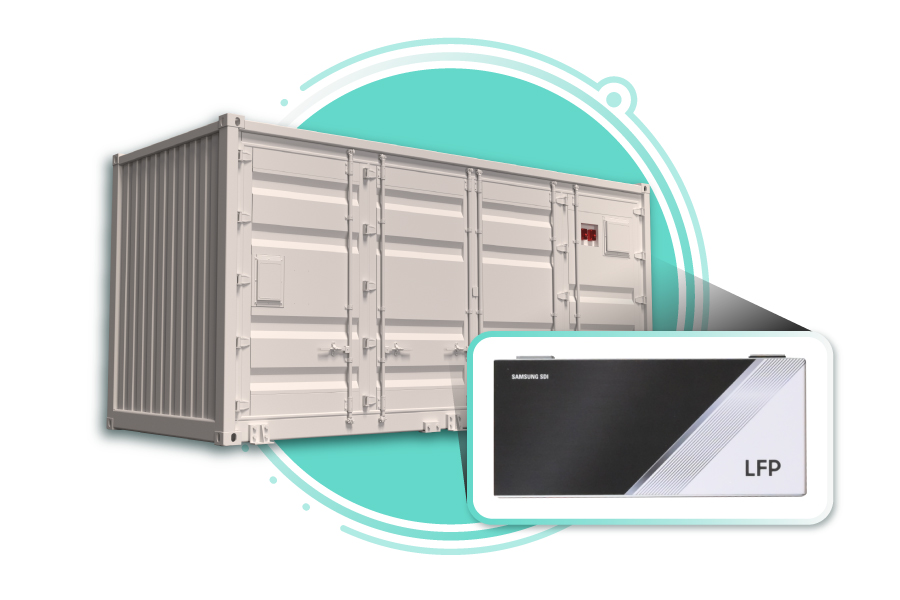
[SAMSUNG SDI plans to unveil SBB(Samsung Battery Box) 2.0 that applies LFP battery to secure price competitiveness.]
SAMSUNG SDI’s UPS and ESS are also possess a competitive edge in safety, as they are designed to meet the UL9540A standard from UL Solutions, a global certification provider.
The UPS is equipped with insulation and fire-retardant sheets within its module, effectively preventing heat from propagating to adjacent cells if an event occurs in certain cells. Furthermore, an Enhanced Direct Injection(EDI) system is applied to the ESS to further enhance safety at the container level.
The ESS market for data center power supply is projected to grow continuously, driven by the expansion of AI. Based on thorough market analysis and ongoing technology development, SAMSUNG SDI will strive to lead the data center ESS market.

SAMSUNG SDI Newsroom
We deliver the latest news and issues coming out of SAMSUNG SDI.