Technology & Products
[Battery Glossary] Nickel, Cobalt, Manganese, Aluminium
2025.09.23
|
[Battery Glossary] answers the questions related to batteries with key term explanation. From fundamental battery principles, manufacturing processes to emerging next-generation technologies, [Battery Glossary] makes battery concepts easy to understand. |
Nickel
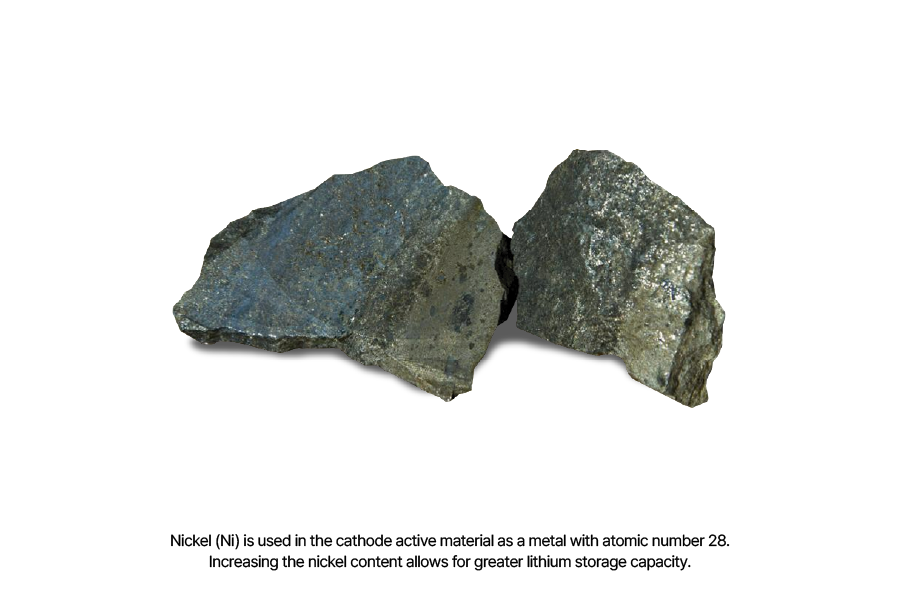
Nickel (Ni) is one of the key materials used in the cathode active material of lithium-ion batteries. Increasing the nickel content in the metal oxide synthesized with lithium allows for greater lithium storage capacity. This characteristic enhances battery capacity and energy density, making high-nickel batteries highly desirable among customers. However, if the proportion of nickel is increased indefinitely, the proportion of materials responsible for safety in the cathode active material decreases. Therefore, an appropriate balance must be maintained. SAMSUNG SDI has introduced products such as P5 (88% nickel content) and P6 (91% of nickel content), which feature a high nickel ratio.
Cobalt
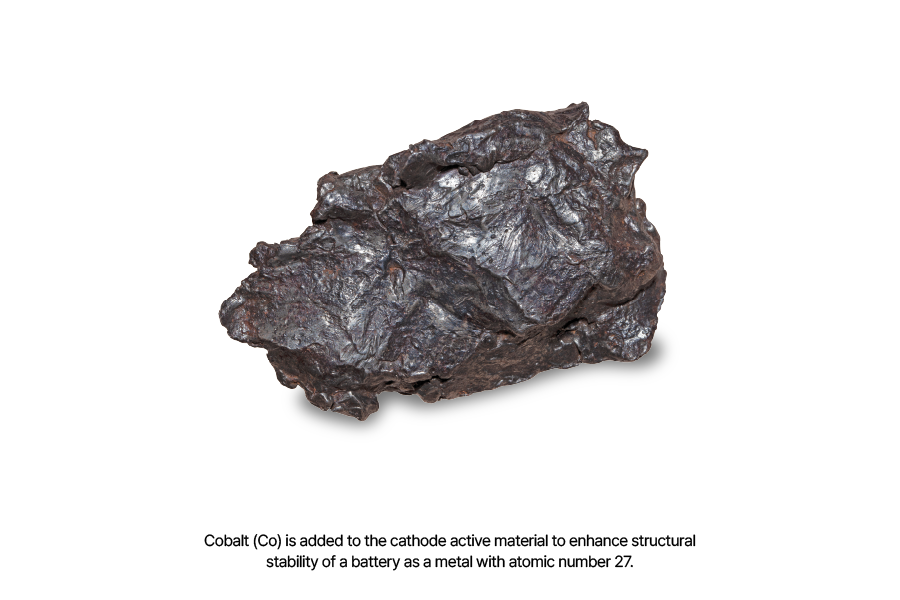
Cobalt (Co) is added to the cathode active material to enhance the structural stability of lithium-ion batteries. Unlike lithium, which reacts easily with air and water, cobalt remains stable in these conditions. By appropriately mixing cobalt with lithium in the cathode active material, the risk of explosion can be reduced, resulting in a structurally stable battery. However, cobalt is expensive because it is difficult to mine independently; it is primarily obtained as a byproduct of refining copper or nickel.
Manganese
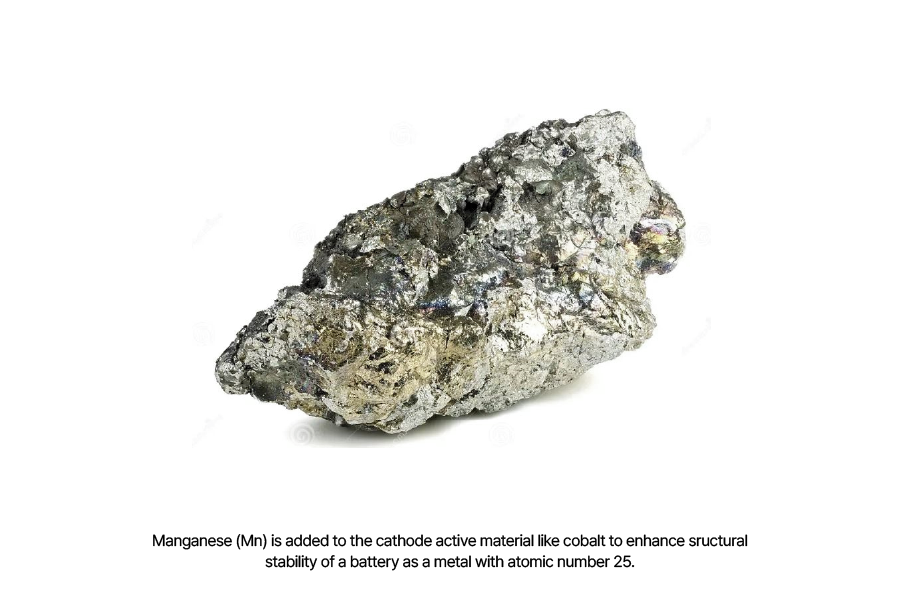
Manganese (Mn), like cobalt, is also used in the cathode active material to improve the structural stability of lithium-ion batteries. Manganese is relatively inexpensive, costing about one-thirtieth of cobalt’s price. However, it has a drawback—at high temperature, its structure becomes unstable, leading to dissolution, which can shorten battery lifespan. Consequently, manganese is generally not used as the sole material in cathode active materials.
Aluminum
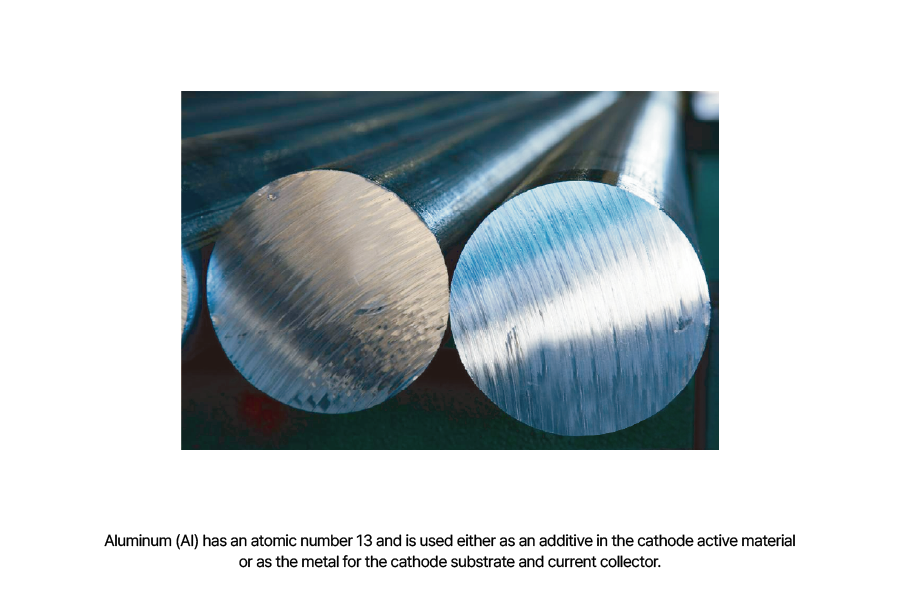
Aluminum (AI) is used either as an additive in the cathode active material or as the metal for the cathode substrate and current collector. As a cathode active material component, aluminum enhances the power of lithium-ion batteries. Additionally, due to its ability to collect and transfer electrons, aluminum is utilized in the cathode substrate and current collector, serving as a pathway for electron movement.

SAMSUNG SDI Newsroom
We deliver the latest news and issues coming out of SAMSUNG SDI.