People & Culture
[SDI Today] Renewable Energy Expansion with Additional Solar Power Facilities
2025.08.21
SAMSUNG SDI is continuing its effort to achieve carbon neutrality by expanding the share of renewable energy. Let’s look back on the achievements outlined in Sustainability Report published in June, 2025.
In 2024, SAMSUNG SDI achieved 37% of renewable energy transition rate for all domestic and overseas subsidiaries. This is a fourfold increase compared to 2022, when SAMSUNG SDI joined the RE100 initiative*, and a 10% increase compared to 2023.
*RE100 Initiative: A voluntary initiative in which companies commit to sourcing 100% of their electricity consumption from renewable energy such as wind and solar power.
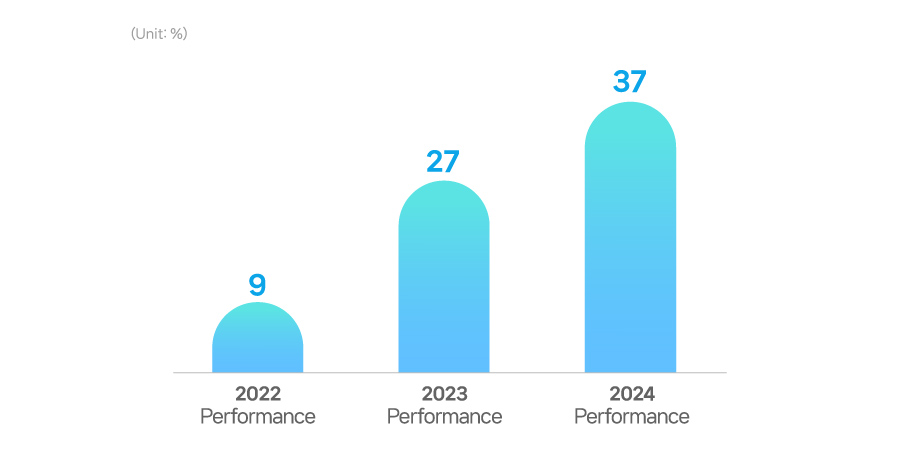
[SAMSUNG SDI’s Renewable Energy Transition Rates]
The expansion of renewable energy has been achieved through the installation of solar power facilities at production sites. Starting with Giheung in 2023, SAMSUNG SDI installed and has been operating solar power facilities at SDIHU since 2024. For Cheonan, Ulsan, and Gumi factories, the company has secured renewable energy suppliers and is sourcing electricity from power generation facilities installed within its own factories.*
*On-Site PPA System: The electricity user (SAMSUNG SDI) provides space for facility installation to the electricity supplier, and the electricity is supplied directly to the user without going through the electricity market.
SAMSUNG SDI plans to continuously expand solar-based renewable energy capacity by adding facilities at Ulsan factory and installing new facilities at SDIEM.
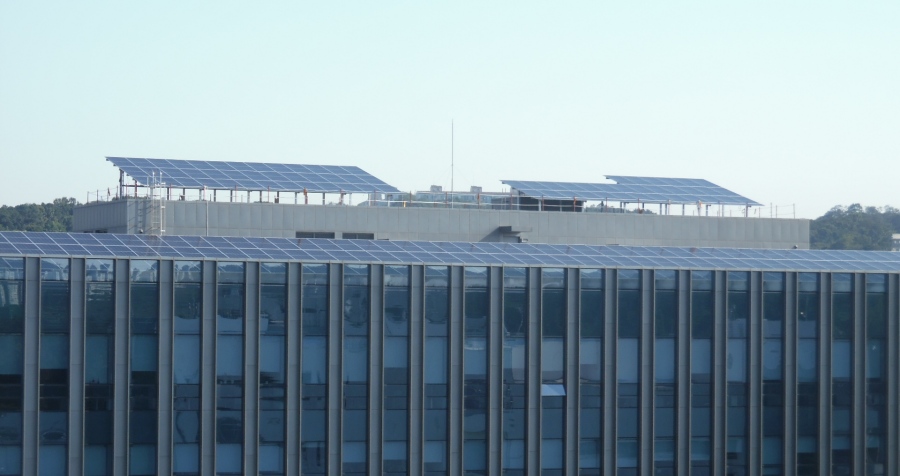
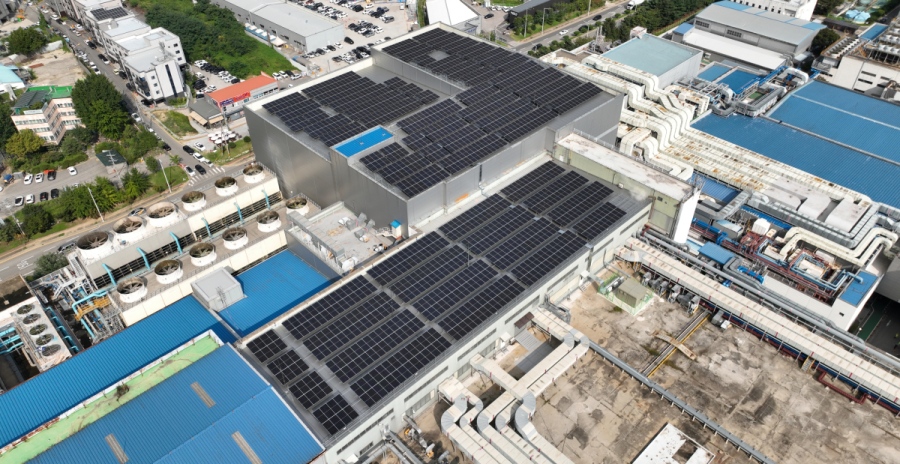
[Solar power facilities installed at Giheung (top) and Cheonan factory (bottom)]
In addition, SAMSUNG SDI is promoting renewable energy transition on multiple fronts by combining various approaches such as green purchase* and obtaining renewable energy certificates.
*Green purchase: Purchasing renewable energy while obtaining certificates proportional to the amount of electricity consumed to certify the use of renewable energy.
SAMSUNG SDI reduced direct GHG emissions by 40,000 tons through measures such as introducing low-temperature regenerative dehumidifiers at all production sites and waste heat recovery from flash steam, reducing energy consumption significantly.
The company has also introduced an energy management system at its domestic manufacturing sites to monitor energy consumption in real time, and plans to expand implementation of the system to its overseas subsidiaries this year.
SAMSUNG SDI will continue to strive to achieve its goal of transitioning 100% of the electricity used at all domestic and overseas sites to renewable energy by 2050.

SAMSUNG SDI Newsroom
We deliver the latest news and issues coming out of SAMSUNG SDI.