Technology & Products
[SDI Focus] Separators: The Hidden Hero behind Battery Safety
2025.08.11
In lithium-ion batteries, the separator is a material that prevents physical contact between the anode and cathode while simultaneously allowing lithium ions to move freely between them. Although these functions may seem contradictory at first glance, various technologies are applied to the separator to enable it to perform both roles effectively.
The separator is made from polymer materials such as PP and PE*, which are commonly found in everyday items like plastic bags and containers. These base materials are mixed with additives and processed into a film. The separator is then manufactured through stretching and extraction processes. Stronger stretching increases the separator’s strength, improving resistance to external impacts. SAMSUNG SDI continues to make efforts to enhance the strength of its separators.
* PP: Poly Propylene/PE: Poly Ethylene
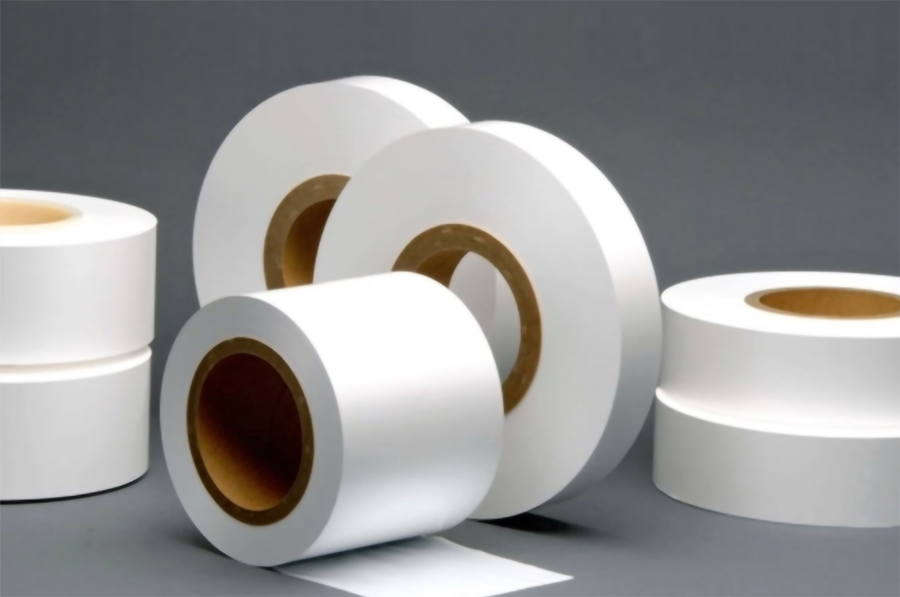
[A separator is a key material for ensuring protection against short circuits in the electrodes.]
With growing interest in fast charging technology, separator technology is also evolving to better support fast charging.
While preventing direct contact between the anode and cathode, the separator must allow lithium ions, which are about 0.07 nm in size, to pass through. When viewed under a microscope, the separator reveals microscopic pores, which serve as pathways for lithium ions to move between the electrodes. The performance of these pores can be measured by air permeability time*. By applying technologies that increase this permeability time, SAMSUNG SDI enhances the separator’s ability to allow more lithium ions to pass through more quickly, making it better suited for fast charging.
* Air Permeability Time (Sec/100cc): An indicator of performance that measures how many seconds it takes for 100cc of air to pass through.
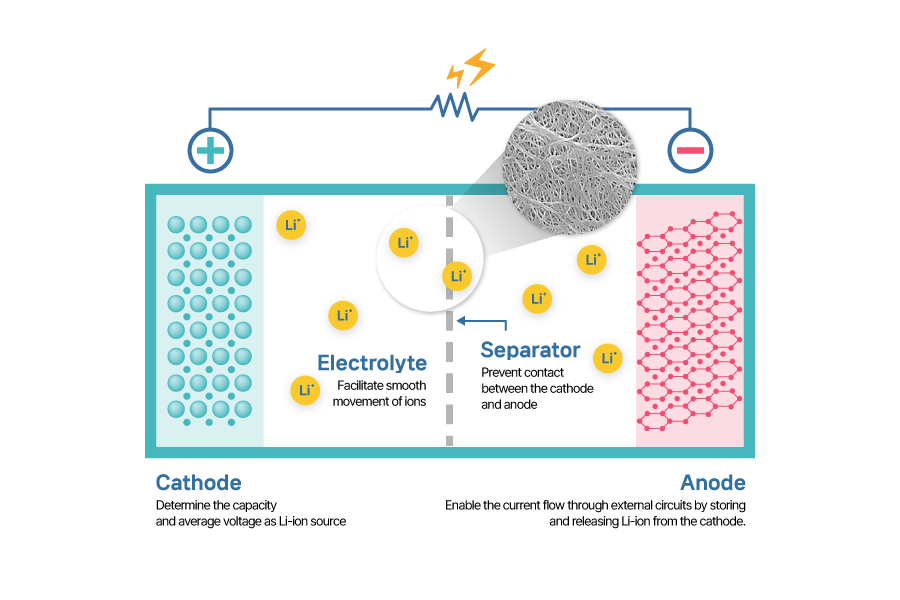 [Lithium ions move between pores of the separator]
In addition to strength, a separator’s heat resistance and adhesion also affect battery safety and quality. These properties are enhanced by SAMSUNG SDI’s coating technology. In particular, for prismatic and cylindrical batteries, a ceramic layer is coated onto the separator to improve heat resistance and prevent deformation caused by temperature changes.
SAMSUNG SDI is continuously developing coating technologies that not only enhance heat resistance but also enable thinner separators. Thinner separators allow for more cathode and anode active materials in the same space, thereby increasing energy density. Currently, the company applies its third-generation coating technology to produce thin separators with improved high-temperature resistance.
For pouch batteries, as IT devices become increasingly thinner, SAMSUNG SDI is enhancing adhesion to support thinner separator designs.
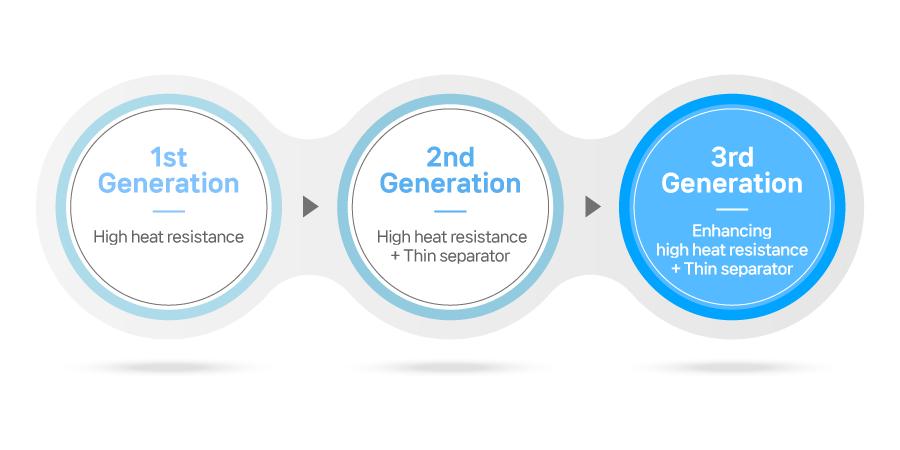
[SAMSUNG SDI is developing coating technologies to enhance heat resistance and enable thinner separators]
The company will continue to advance next-generation separator technologies to produce safer, high–energy-density batteries.

SAMSUNG SDI Newsroom
We deliver the latest news and issues coming out of SAMSUNG SDI.