People & Culture
[SDI Interview] We Lead Digital Transformation Using AI and Data Technologies
2025.07.17
AI and data technologies are evolving rapidly. As a result, it is becoming increasingly important for companies to make strategic decisions about when, how, and which technologies to adopt. SAMSUNG SDI is also actively embracing new technologies to make effective use of its data and knowledge assets. Meet Pro Jae-moon Lee and Jung-iee Yoo, who are leading the company’s digital transformation through data-driven innovation.
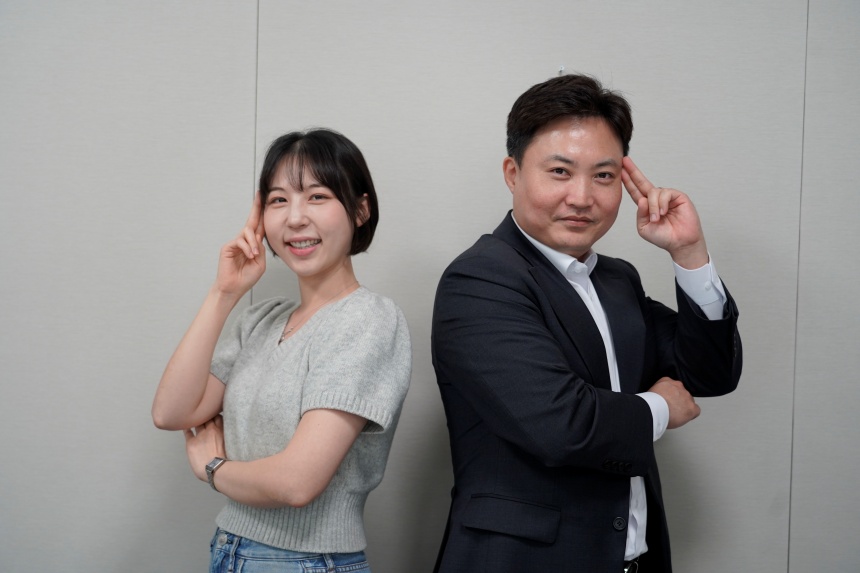
[Pro Jung-iee Yoo (left) and Pro Jae-moon Lee (right) are preparing for introduce generative AI.]
Q. Please introduce your role and responsibilities at work.
Pro Jae-moon Lee) We collect and analyze data scattered across various parts of SAMSUNG SDI. Furthermore, we build and operate a data platform that helps improve work productivity by leveraging this data. This platform serves as a hub for data from research, development, engineering, and quality, providing all employees with an environment where they can carry out their work based on data. We are exploring various ways to make the most efficient use of the vast amount of data we have gathered. In particular, we are preparing to adopt generative AI, which is considered a key driver of digital transformation.
Pro Jung-iee Yoo) Beyond simply adopting new technology, the successful integration and sustainable operation of AI at SAMSUNG SDI require a systematic architecture and robust governance framework that reflect the company’s unique business characteristics and culture. Only then can the system provide reliable answers within the context of SAMSUNG SDI’s complex data and operations, while ensuring security, quality, and accountability.
Q. What goals are you pursing in your current work?
Pro Jung-iee Yoo) My goal is to help SAMSUNG SDI employees work more efficiently through the use of generative AI. For example, when an equipment issue arises on the production line, employees can consult the AI for the cause and possible solutions. They can then proceed with their tasks based on the AI’s suggestions, even conducting related analyses—all within the same system.
Pro Jae-moon Lee) We aim to transform today’s generative AI into an intelligent Q&A system that reduces confusion in real work settings, maximizes efficiency, and ultimately contributes to establishing a stable foundation for SAMSUNG SDI’s digital transformation.
For SAMSUNG SDI’s AI to work more intelligently, it must fully understand the company’s unique documents, data, and ways of working. To support this, we are building a system that enables accurate search and retrieval of the necessary information and knowledge based on internal data.
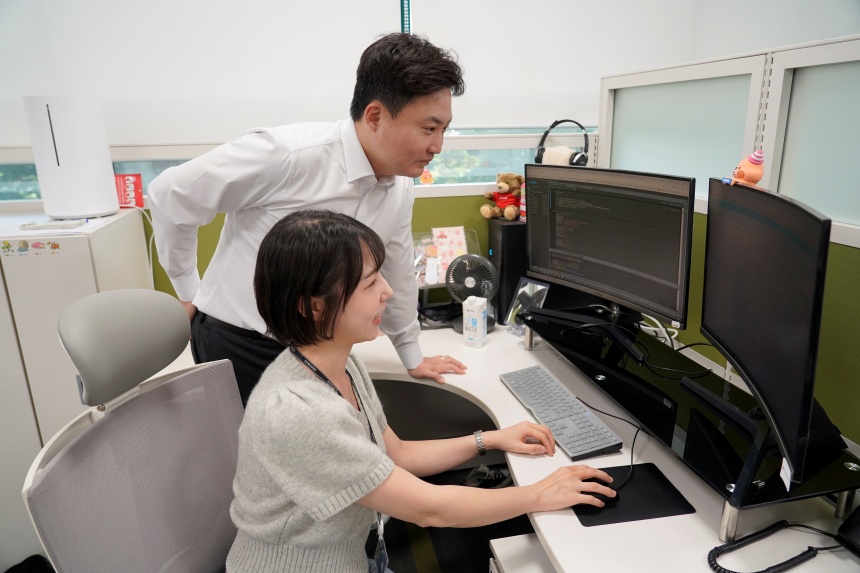
[Pro Jae-moon Lee (top) and Pro Jung-iee Yoo (bottom) are working as generative AI engineers.]
Q. Do you have any episodes that you remember specifically?
Pro Jung-iee Yoo) One memorable experience during LLM* testing was a misinterpretation case. While reviewing the response quality of generative AI based on battery-related documents, we found that the AI sometimes failed to understand industry-specific terminology and context unique to the battery industry. For example, it misinterpreted ‘formation’, a key process in battery manufacturing, as the planet ‘Mars’, and applied the general meaning of the word rather than technical definition.
This occurred because the AI was making inferences based solely on text, without understanding the context in which employees were using specific terms. Through this experience, we clearly recognized the importance of not just adopting a general-purpose LLM, but building a generative AI system that incorporates SAMSUNG SDI’s specialized terminology and business context.
*LLM (Large Language Model): An AI model trained on vast amounts of data to understand and generate human language.
Q. What challenges do you face in your work?
Pro Jae-moon Lee) The most challenging part is converting the vast amount of internal knowledge and information into structured data. Since most of this information exists in unstructured formats such as documents, reports, and presentations, it takes significant time to organize and refine it in a way that AI can understand.
The most challenging part is converting the vast amount of internal knowledge and information into structured data. Since most of this information exists in unstructured formats such as documents, reports, and presentations, it takes significant time to organize and refine it in a way that AI can understand. Expression styles vary from person to person, and in many cases, the underlying context is more important than the report itself. As a result, integrating and applying such information takes considerable time.
Pro Jung-iee Yoo) AI is a technology that requires massive computational power. In particular, deploying LLMs in real-world business applications demands significant computing resources even at the inference stage. This is where GPUs come into play. However, there is currently a global shortage of GPUs, which are essential for both training and running AI models. Within the company as well, we face the challenge of operating and training models with limited infrastructure. As a result, we are constantly working to allocate resources efficiently and set clear priorities—an ongoing task that we believe requires continuous attention and effort.
Q. I heard that your group has a unique culture.
Pro Jae-moon Lee) Our team is currently split between two locations—Cheonan and Giheung. In such a setup, communication gaps or misunderstandings during work can easily occur. To minimize these issues, we have actively adopted collaboration tools for managing development code and documentation. By using these tools, we can easily share, edit, and manage documents together, which has significantly improved collaboration among team members and led to higher overall satisfaction.
In particular, since most of our work is carried out through online communication, we’re able to maintain a strong sense of ‘working together’. With work histories and progress shared online, trust naturally builds among team members. As a result, we believe we’re fostering a flexible organizational culture that enables seamless collaboration and agility, regardless of physical location.

SAMSUNG SDI Newsroom
We deliver the latest news and issues coming out of SAMSUNG SDI.