Technology & Products
[SDI Interview] We Manage Batteries More Safely and Efficiently with BMS Technology
2025.05.20
The Battery Management System (BMS) is a system that monitors and diagnoses the condition of batteries in electric vehicles. SAMSUNG SDI continues to strengthen its BMS capabilities to ensure the safe and efficient management of batteries. Through an interview with Pro Dolores Kim and Pro Dae-sung Lee, who design BMS software at SAMSUNG SDI, we explore their efforts to strengthen the company’s BMS technology capabilities.
Q. Please introduce your role and responsibilities at work.
Pro Dae-sung Lee) As interest in battery safety continues to grow, the role of BMS in monitoring and diagnosing battery conditions is becoming increasingly important. At the same time, with the advancement of the battery industry, efforts to reuse and recycle batteries are also expanding. In order to respond quickly to these changes and seize new opportunities, securing BMS technology is essential.
The BMS Development Group designs and implements solutions that reflect customer the requirements. In addition, we analyze data from EVs in real-world driving conditions to identify the root causes of issues and provide solutions when problems arise.
Our group is broadly divided into two main areas: hardware design, which involves circuit design, and software design, which focuses on developing logic to estimate and control the state of the battery. After completing the architecture design that serves as the foundation for software development, I am responsible for programming and implementing actual functionalities and verifying their performance. I am also in charge of collecting and analyzing battery-related data to diagnose whether the system operates accurately for its intended purpose.
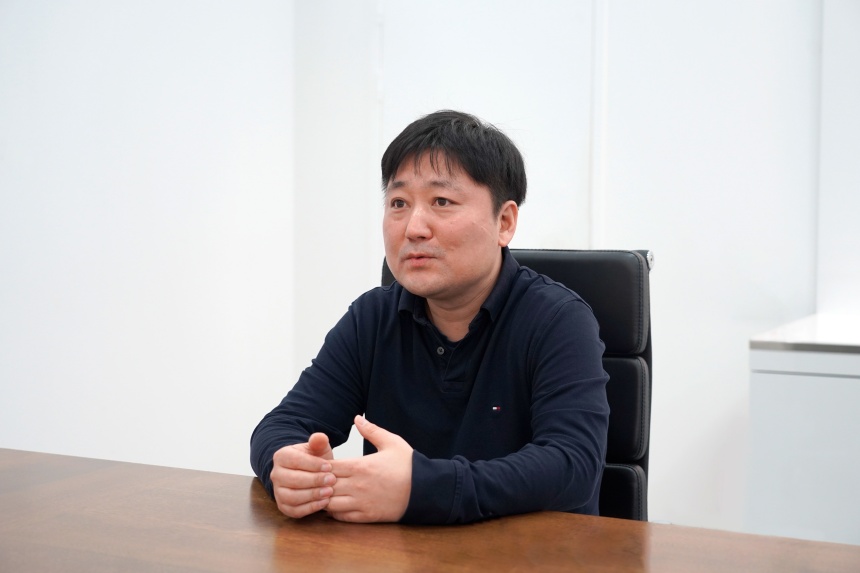
[Pro Dae-sung Lee is in charge of BMS software programming at SAMSUNG SDI]
Pro Dolores Kim) I am responsible for defining the functions and performance requirements necessary for the proper operation of the BMS. This involves breaking down and analyzing customer requirements, then specifying the corresponding software requirements to provide developers with clear guidelines for implementation.
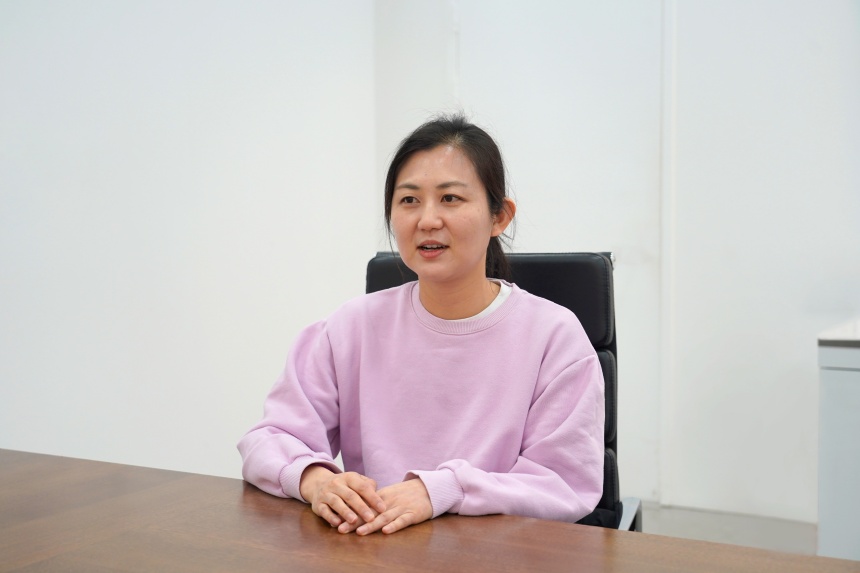
[Pro Dolores Kim is in charge of specifying BMS software requirements at SAMSUNG SDI]
Q. What goals are you pursing in your current work?
Pro Dae-sung Lee) Our group is currently developing core BMS technologies such as Wireless BMS, cybersecurity, abnormal cell diagnostics, and battery state prediction. Wireless BMS, for instance, enables battery data communication between the battery cells and the BMS to be handled wirelessly. By eliminating wiring, we can reduce the overall weight of the battery pack and improve internal space efficiency, allowing for more flexible and diverse pack designs.
At the same time, cybersecurity has also become a critical challenge, as wireless communication is relatively more vulnerable to cyberattacks. In fact, last year, we successfully obtained Cyber Security Management System (CSMS) certification* for five global sites, including ones in Korea.
*Cyber Security Management System (CSMS) certification: This certification demonstrates that an organization has established proper processes and security policies to effectively respond to cybersecurity threats targeting electrical and electronic components, including the battery, and software installed in vehicles.
Q. Do you have any episodes that you remember specifically?
Pro Dolores Kim) Our group communicates frequently with oversea subsidiaries, including those in the Americas and Austria. When issues arise, we’re able to leverage the time difference to maintain a 24-hour problem-solving cycle. Despite the physical distance, working together to resolve challenges fosters a strong sense of camaraderie. It's quite remarkable how familiar voices alone—despite not having met many of them in person—can create such a deep sense of connection."
Pro Dae-sung Lee) The most memorable experience for me was a business trip taken to respond an issue with a customer vehicle equipped with our battery pack. We received the vehicle from the customer and conducted an in-depth analysis on-site, with participation from various departments involved in pack development. As a software developer, I usually work in front of a computer screen and don’t often get to interact with physical products. That’s why this experience was especially meaningful. It gave me the opportunity to conduct testing firsthand and collaborate closely with local teams.
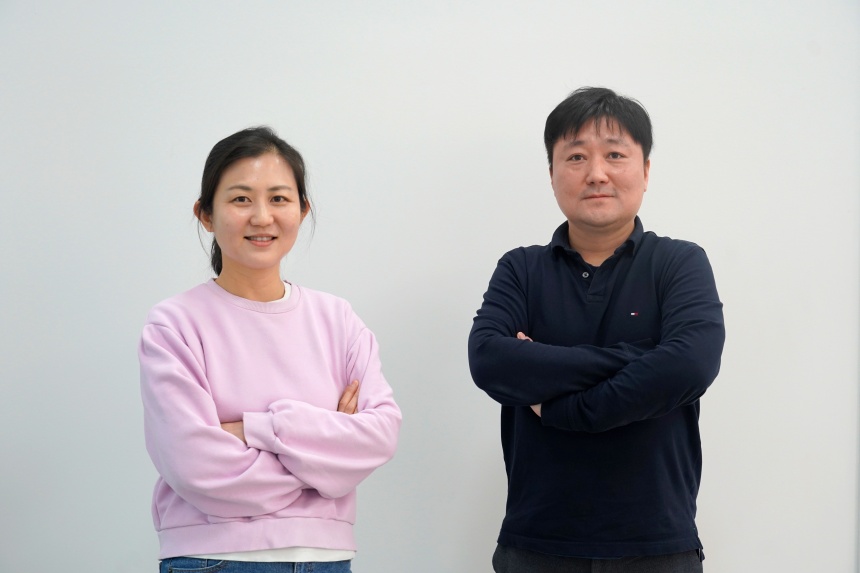
[Pro Dolores Kim and Pro Dae-sung Lee are both in charge of BMS software development]
Q. I heard that the BMS Development Group has a unique culture.
Pro Dae-sung Lee) One of our key characteristics is our preference for efficiency and a streamlined approach, along with a horizontal, open work culture. We actively utilize internal IT support tools to minimize unnecessary meetings and reduce the burden of writing meeting minutes.
We also have a special OJT culture for new employees. Each team members introduce their own responsibilities while providing an overview of the overall development process, project history, development tools, and even related tasks handled by other departments. Even those who are not new employees you can still participate in these sessions. The detailed explanations of actual tasks help deepen understanding of the work and provide opportunities to become more familiar with one another. As a result, participants report a very high level of satisfaction.
Pro Dolores Kim) When field issues arise in vehicles, there are times when we don’t have sufficient data for analysis. In such cases, identifying the root cause feels much like solving a puzzle. This is when our team’s unique culture of communication becomes especially valuable. By discussing the issue that individuals cannot solve alone and listening to diverse perspectives from team members, we’re often able to uncover critical clues that lead us toward a solution.

SAMSUNG SDI Newsroom
We deliever the lastest news and issues coming out of SAMSUNG SDI.