People & Culture
[SDI Interview] We Improve Safety and Efficiency through AI Inspection Development
2025.04.22
SAMSUNG SDI is improving battery quality by developing and deploying AI inspection into mass production. By tracking defects more accurately and quickly during production, AI inspection technology improves battery safety and process efficiency. Today, we will hear from Kyung-min Kim and Hyang-sin Chae who are developing AI inspection technology to overcome the limitations of conventional inspection technology.
Q. What does the AI Inspection Development Group do?
Pro Kyung-min Kim) Our work is mainly divided into two areas: developing vision inspection systems and developing and operating AI platforms.
I am responsible for operating our in-house AI platform called ‘Vision AI’ portal, which provides engineers with easy access to AI inspection technology for managing or developing battery production lines.
This platform collects original inspection images taken by each inspector in manufacturing sites. In consultation with those in charge of the production process, we select the inspectors to which the AI model will be applied and collect original images. We then label them to distinguish between good and defective products. These datasets are used to train the AI model to create the final Vision AI model to be applied to the production line.
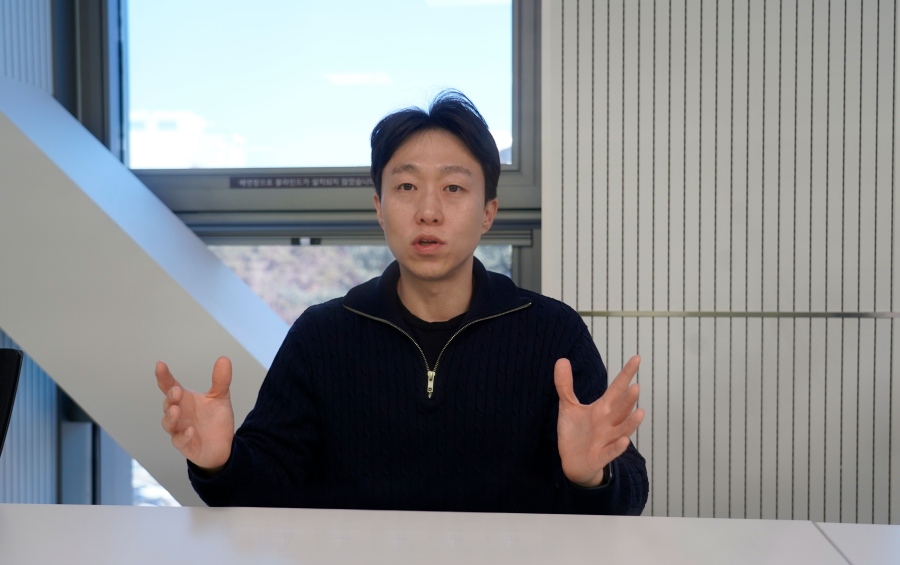 [Pro Kyung-min Kim is in charge of ‘Vision AI Portal’ operation.]
Pro Hyang-sin Chae) I am in charge of vision inspection systems, which automatically detect defects with AI on battery exteriors. We use high-resolution cameras capable of capturing images in microseconds and image processing software to photograph and analyze the product’s surface or shape, distinguishing between good and defective items.
We are using the AI trained through ‘Vision AI’ portal to further improve the performance of our AI vision inspector. The images captured by the AI vision inspectors are also fed into the ‘Vision AI’ portal to help create smarter AI models, creating a virtuous cycle.
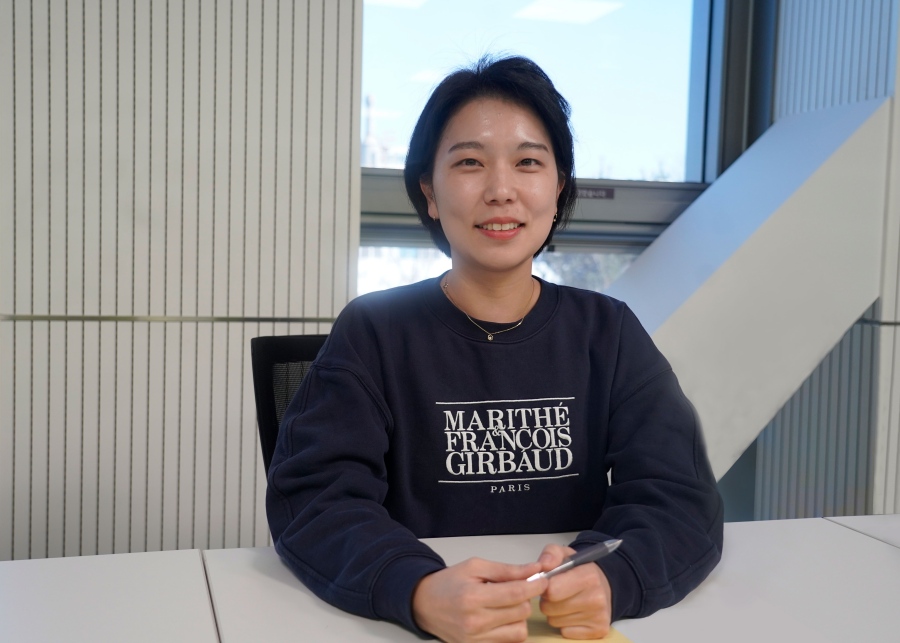
[Pro Hyang-sin Chae is in charge of vision inspection systems.]
Q. Why do you think AI inspection development is important?
Pro Hyang-sin Chae) AI inspection can handle challenging inspection criteria that are difficult to solve with conventional technologies, which improves product safety and manufacturing efficiency. That is why our team is striving to develop a new inspector applied with new technologies. Recently, we have incorporated AI technology into an X-ray device to develop technology that detects metal debris inside batteries and applied it to real-world processes to improve battery safety.
Q. What challenges do you face in your work?
Pro Kyung-min Kim) Because our work directly impacts quality, we cannot afford mistakes. That’s why acquiring high-quality data for AI training is so important. We need extensive image data to properly validate whether the trained results are well applied to AI models. For this, we are working harder to communicate with on-site departments such as battery development and process management.
Pro Hyang-sin Chae) Since we’re involved across the entire production process, we must understand each step thoroughly to identify the cause of defects. Even with the same battery specifications, tiny differences can lead to a wide variety of defect types. So, I try to understand the process and product structure, rather than just trusting my intuition or experience.
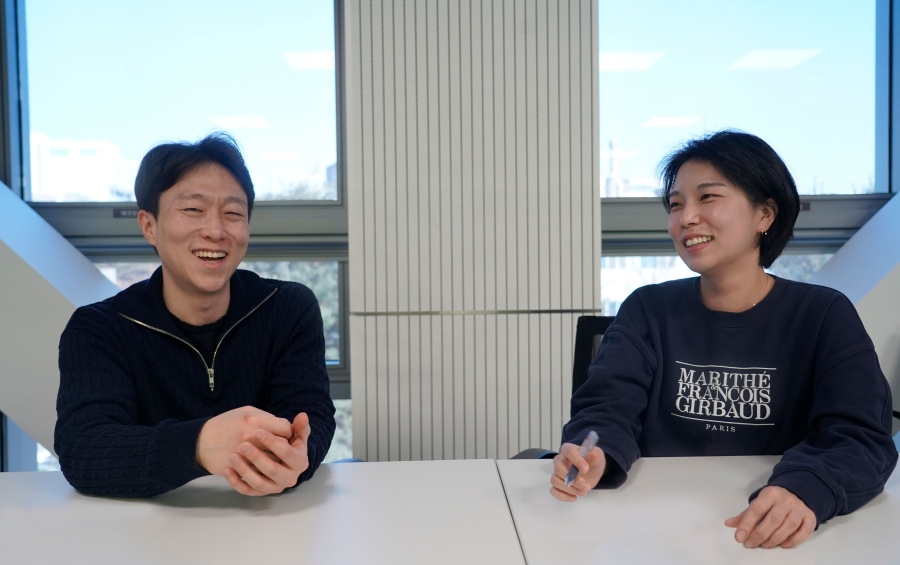
[Pro Kyung-min Kim (left) and Pro Hyang-sin Chae (right) are trying to improve AI inspection technology]
Q. What are your goals?
Pro Hyang-sin Chae) Initially, our focus was on implementation and mass production optimization. Now, we aim to evolve toward smart AI by exploring and applying more advanced technologies tailored to each process, ultimately improving both product quality and manufacturing efficiency.
Pro Kyung-min Kim) My goal is to further activate and expand the use of ‘Vision AI Portal’. I want to increase awareness of the service and find ways to maximize its usability and stability. We will also continue to refine our inspection techniques to minimize “over-inspection,” which is when we miss a defect, while never allowing “under-inspection,” which is when we label a good product as defective.

SAMSUNG SDI Newsroom
We deliver the latest news and issues coming out of SAMSUNG SDI.