People & Culture
[Professional’s Major] Interview with Pro Si-young Lee at MPB) Technology Innovation Group
2025.04.01
|
[Professionals’ Major] introduces the major and job roles of our employees. It also explores their research field before joining the company and how their experiences influenced their career and job roles. |
We met Pro Si-young Lee at MPB) Technology Innovation Group, who is developing battery welding technology after graduating with a degree of Materials Science and Engineering. Materials Science and Engineering is a field of study that involves understanding the fundamental structures and properties of various materials and researching the development of new materials. Let’s hear about Pro Si-young Lee’s academic background and her role as she pursues her dream of becoming the best welding expert.
Q. Could you briefly introduce your job?
# Developing welding technology to connect conductors inside batteries
Hello, I work the MPB) Technology Innovation Group, which is responsible for developing new technologies in various areas such as welding, etching, processing, inspection, and diagnostics, and optimizing them for mass production. I specifically work on developing welding technology that connects conductors inside batteries using lasers and applying this technology to mass production.
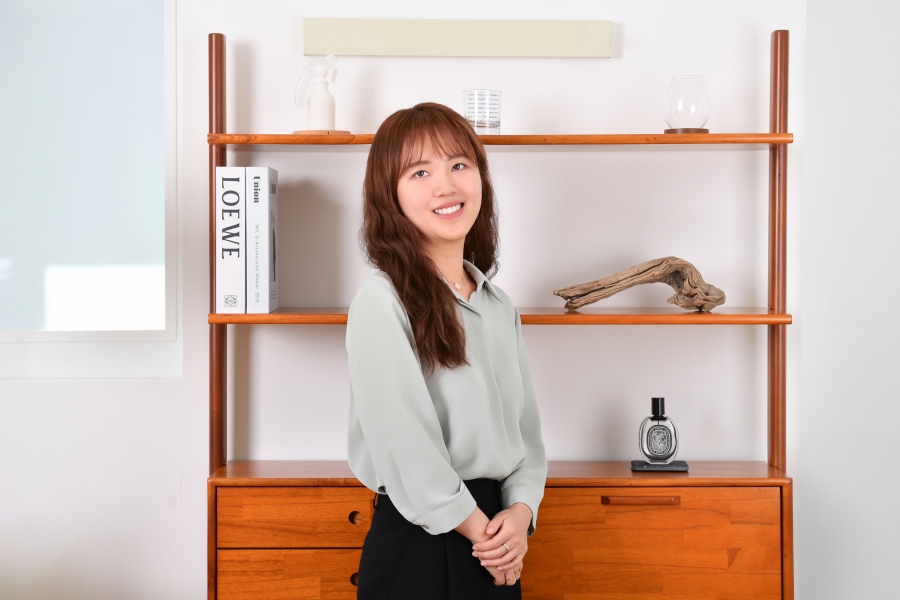
[Pro Si-young Lee develops battery welding technologies]
Q. What do you find attractive about Material Science and Engineering?
# A major closely related to the battery industry
Materials Science and Engineering covers the properties of various materials including metals, non-metals, and polymers. These materials are highly relevant to many industries, especially the battery industry. For example, metallic materials are used for substrates and current collectors, and polymers are used in components like separators and casings that form the battery structure. The knowledge gained in this field is highly beneficial when developing each component of a battery, which I consider a major advantage.
Q. What research did you conduct at school? How did it influence your career and current role?
# Designing and fabricating alloy materials and verifying their properties
During my master’s and doctoral studies, I conducted research on designing and developing new metal materials. By adding metallic elements to create alloys, the material’s properties change. I designed and fabricated alloy materials and analyzed whether the desired properties were achieved.
This research experience has greatly helped me in my current work on welding technology development. When laser-welding on metallic materials, various factors can degrade the welding quality. Here, it is crucial to analyze how the material properties change during welding and determine optimal welding conditions. I used the methods I learned during my studies at school to identify root causes of welding issues and improve them.
Q. Why did you choose a manufacturing technology role as a materials science and technology major?
# Rewarding experience of solving variables during pilot production
The biggest reason I chose a manufacturing technology job was my strong interest in the pilot production phase. At school, I participated in a national project where I produced prototypes using alloys I designed. At the mass production stage, many unforeseen variables emerged, and though it wasn’t easy to verify and control them, I found it very rewarding when I successfully produced the prototypes. That experience motivated me to pursue a career in manufacturing technology.
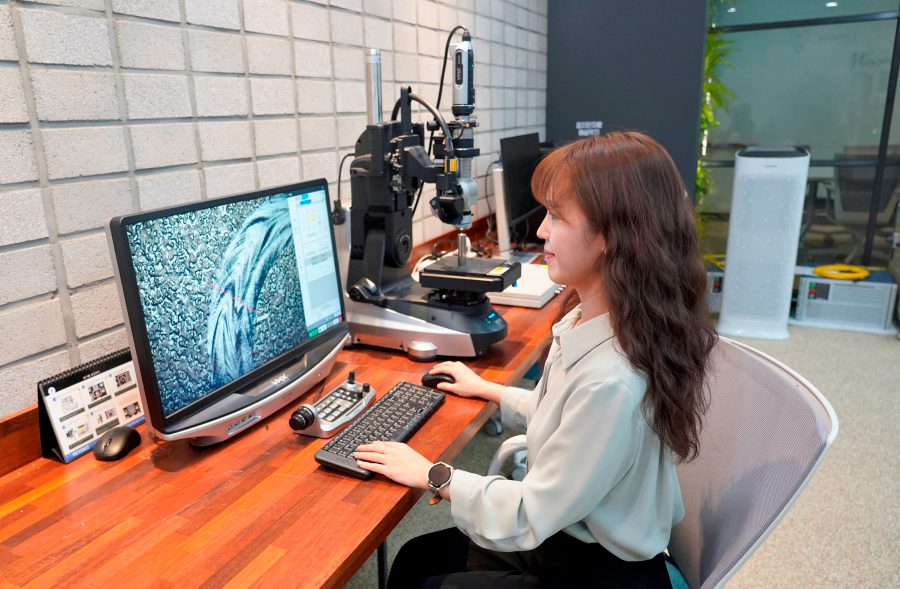
[Pro Si-young Lee analyzes characteristics of the metal weld zone.]
Q. When did you feel most fulfilled after joining the company?
# Zero defects in a run using optimized welding conditions
I feel most fulfilled when a run* with the welding conditions I have optimized resulted in zero defects. Before running the trial, I spend a lot of time designing process variables and optimizing quality before the run. The goal of optimization is to prevent welding defects. Achieving zero defects in the run validates that the method I designed was correct, which gives me a great sense of accomplishment.
* A trial phase where the factory’s pilot line is operated.
Q. Did you face any challenges adapting to your job in the early days? How did you overcome them?
# Quickly learning and organizing unfamiliar terms at work
At first, the terms used in laser welding was unfamiliar, so I had a hard time understanding what was being said during meetings or in daily work. To overcome this, I looked up unfamiliar terms or asked colleagues and seniors about them, and made notes. After repeating the process multiple times, I found that I gradually encountered fewer unfamiliar terms and was able to adapt well to the job.
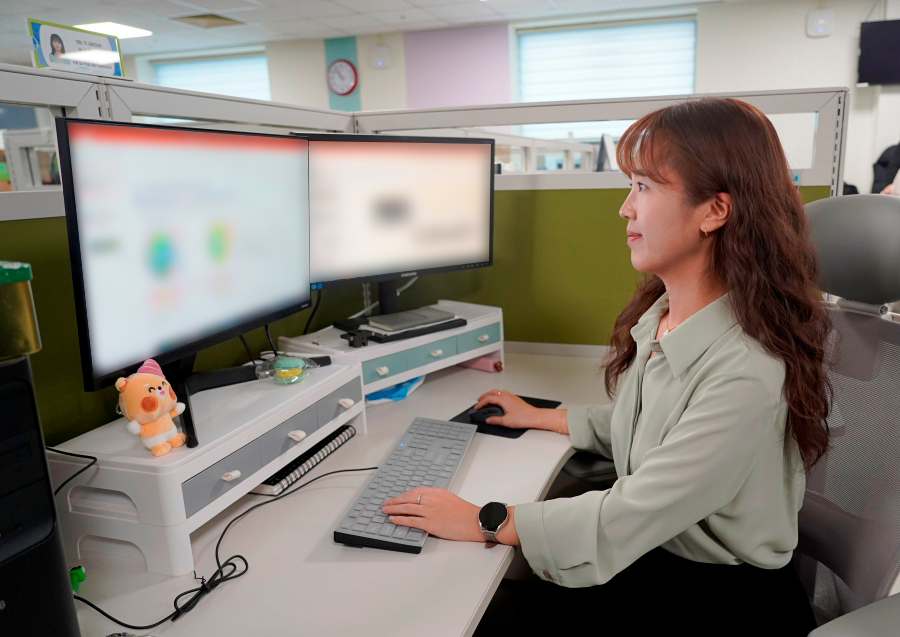
[Pro Si-young Lee studies battery welding technologies]
Q. Do you think you’ve grown since you joined the company?
# Considering both upstream and downstream processes
The biggest difference is a deeper understanding of my work. In the beginning, I was focused only on the process I was in charge of. Now, I also consider both the upstream and downstream processes. I first think about how to define quality standards for the preceding process before welding, and then I also consider how the welding process may affect the next process.
Q. How do you envision yourself 10 years from now at SAMSUNG SDI?
# The first person who comes to mind when a laser welding expert is needed
As an expert in metal materials and laser welding, I want to further develop my expertise. In 10 years, I hope to be the first person that comes to mind whenever a laser welding expert is needed.
Q. Do you have any advice for aspiring materials science engineering students who wish to work at SAMSUNG SDI?
# Grow into an expert in the manufacturing technology field!
Material science and engineering is closely linked with the battery field. Since the major provides knowledge on various battery components and materials, it allows you to develop deep expertise in manufacturing technology roles. This expertise gives you a strong advantage in applying theoretical knowledge to real-world technology. I encourage materials science and engineering students to apply for manufacturing technology roles and grow into experts alongside us.

SAMSUNG SDI Newsroom
We deliver the latest news and issues coming out of SAMSUNG SDI.