Technology & Products
[Battery Glossary] Current, Electric Potential, Voltage, Standard Reduction Potential
2025.03.27
|
[Battery Glossary] answers the questions related to batteries with key term explanation. From fundamental battery principles, manufacturing processes to emerging next-generation technologies, [Battery Glossary] makes battery concepts easy to understand. |
Current
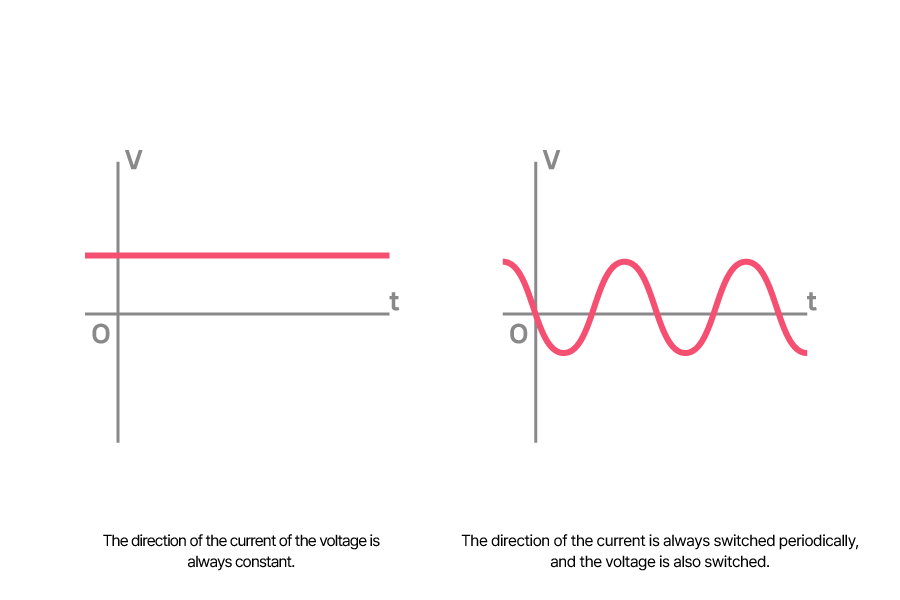
Current refers to a flow of electrons per hour, and the SI unit is Ampere (A). The higher the current, the more electrons will flow.
There are two types of power: direct current (DC) and alternating current (AC). DC is an electric current that always flows in one direction. It mainly refers to the flow of electricity obtained from batteries. On the other hand, AC is an electric current that changes direction and voltage periodically. AC is mainly obtained from a generator of a factory or outlet at home.
Electric Potential
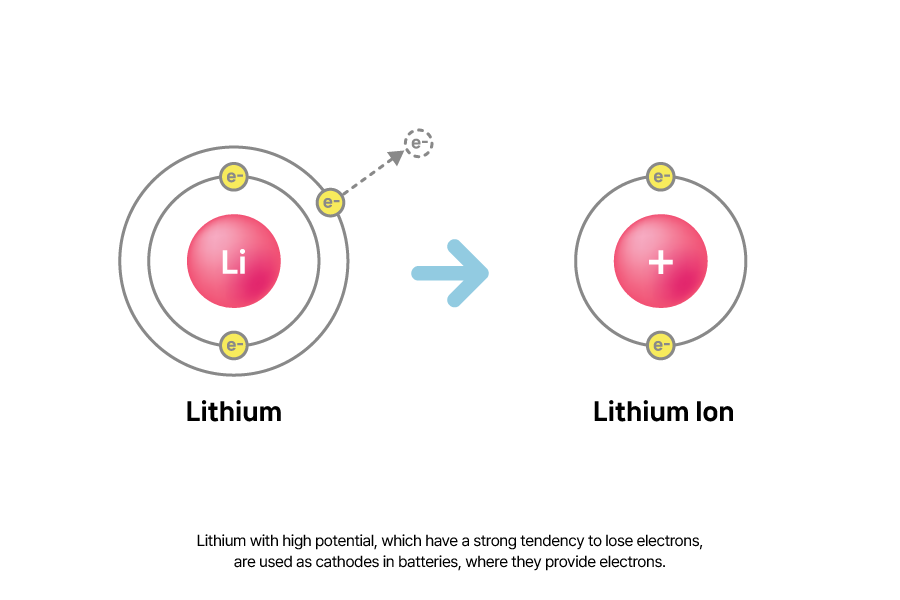
Electric potential refers to the potential energy possessed by a charge. An atom is electrically neutral, with the number of protons and electrons balanced. Protons carry a positive charge, while electrons carry a negative charge. A charge is the electrical property of matter that causes electrical phenomena, with a positive charge representing a positive (+) electrical property and a negative charge representing a negative (-) electrical property.
The outermost electrons of an atom (valence electrons) are weakly bound to the nucleus
and tend to easily escape from the atoms. When an atom or molecule gains or loses electrons, it becomes an ion. Losing electrons results in more protons than electrons, giving a net positive charge, while gaining electrons results in more electrons than protons, giving a net negative charge.
Electric potential is evaluated based on positive charges. The more positively charged a material is, the higher its potential, while the more negatively charged a material is, the lower its potential. Materials with high potential, which have a strong tendency to lose electrons, are used as cathodes in batteries, where they provide electrons.
Voltage
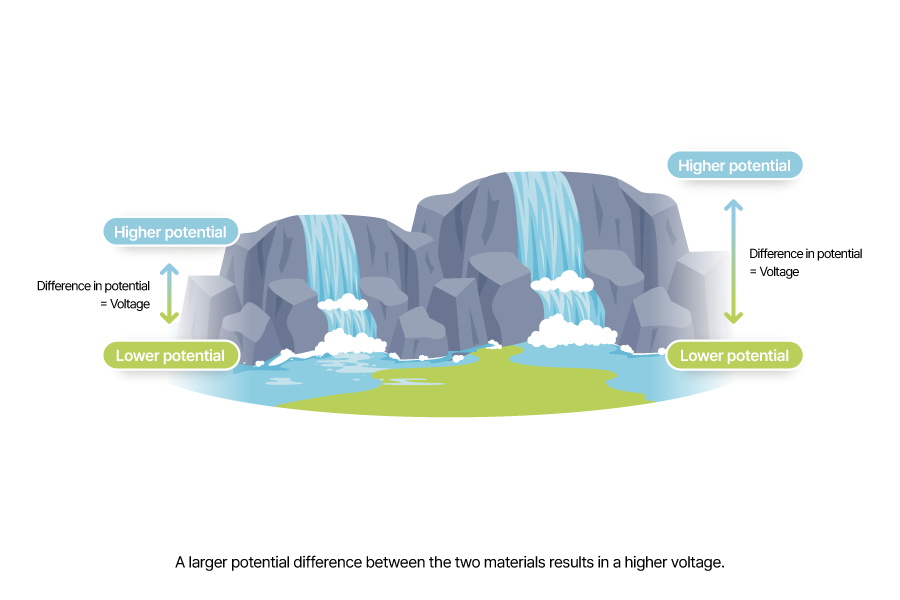
Voltage refers to the force that drives current. To illustrate, consider the flow of water: just as water flows from a higher place to a lower one, electric current flows from a higher potential to a lower potential. The difference in potential is referred to as voltage, measured in volts (V).
The voltage of a battery is determined by the potential difference between its cathode and anode. Consequently, the materials used for the cathode and anode influence the battery’s voltage. Just as water falling from a greater height flows more forcefully, a larger potential difference between the cathode and anode results in a higher voltage. Higher voltage allows for a greater flow of current, enabling high-voltage batteries to store more electrical energy and deliver greater output.
Standard Reduction Potential
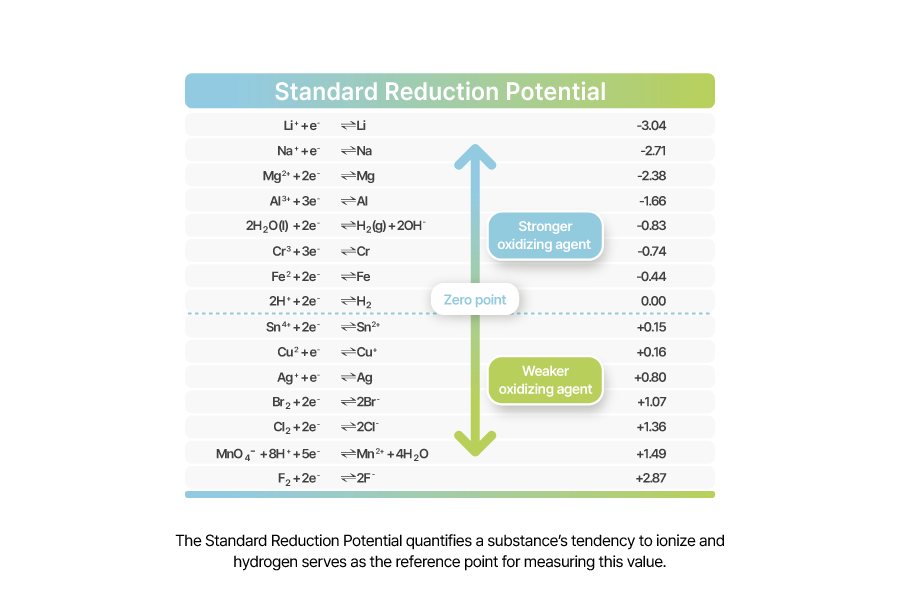
Since the voltage of a battery depends on the potential difference between the cathode and anode, the choice of materials for these electrodes directly affects the voltage. The potential values of various materials can be easily determined using the standard reduction potential.
The Standard Reduction Potential (E°) quantifies a substance’s tendency to ionize. Hydrogen serves as the reference point for measuring this value. To calculate a substance’s potential, hydrogen is placed at the anode, and the material being measured is placed at the cathode. If the standard reduction potential is positive (+), it means the substance has a stronger tendency to gain electrons (reduction) compared to hydrogen ions. Conversely, a negative (-) value indicates a stronger tendency to lose electrons (oxidation). For example, lithium’s standard reduction potential is -3.04, indicating a strong tendency to lose electrons. This makes lithium an ideal active material for battery cathodes, where it serves as electron donor.

SAMSUNG SDI Newsroom
We deliver the latest news and issues coming out of SAMSUNG SDI.