People & Culture
[ESG] SAMSUNG SDI’s Efforts on Resource Circulation
2024.11.26
SAMSUNG SDI places great importance on resource recovery through recycling and reuse in a bid to reduce environmental impact caused by waste batteries. Accordingly, it has set ‘Resource Circulation’ as one of two themes of its ‘Eco-friendly Management’ strategy announced in 2022 and is diligently implementing four sub-tasks under it.
Expand battery recycling
SAMSUNG SDI is expanding battery recycling through creating a close-loop recycling system with the goal of achieving a 26% recycled metal* utilization rate in 2030. In 2023, SAMSUNG SDI recorded a recycled metal utilization rate of 12%. This calculation includes data from material partners.
* Cobalt, Nickel, Lithium
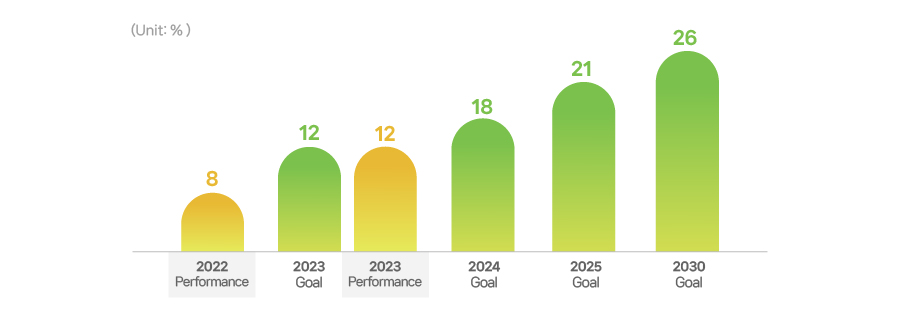
[Results and targets for use of recycled metals]
The closed-loop process is designed to reclaim mineral resources either from process scraps or from end-of-life batteries. SAMSUNG SDI cooperates with external specialized companies to retrieve minerals from process scraps generated during the manufacturing process. In this way, we secure metals extracted from process scraps not only from SAMSUNG SDI but also from customers and partners. The critical minerals extracted from process scraps generated from the manufacturing process are directly supplied to our material partners – precursor and cathode makers- and are fed back into our manufacturing process.
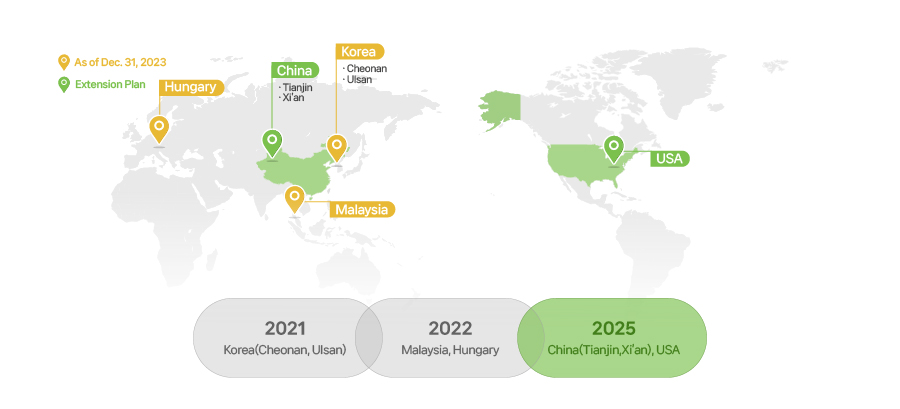
[SAMSUNG SDI’s plant scrap collection locations]
The end-of-life batteries used and discarded by end-consumers are also reclaimed by recycling partners and delivered to our material suppliers. This closed loop process will enable SAMSUNG SDI to expand the proportion of recycled materials used for our battery manufacturing each year.
Minimize waste generation
In 2023, SAMSUNG SDI’s nine operations earned Platinum Validation, the highest rating under ‘the Zero Waste to Landfill’ certification from UL Solutions, a global safety certification company. In 2022, two operations received Platinum Validation, and in 2023, nine operations were certified, exceeding the target of six certifications. In 2024, the goal is to achieve Platinum Validation for all twelve domestic and overseas operations.
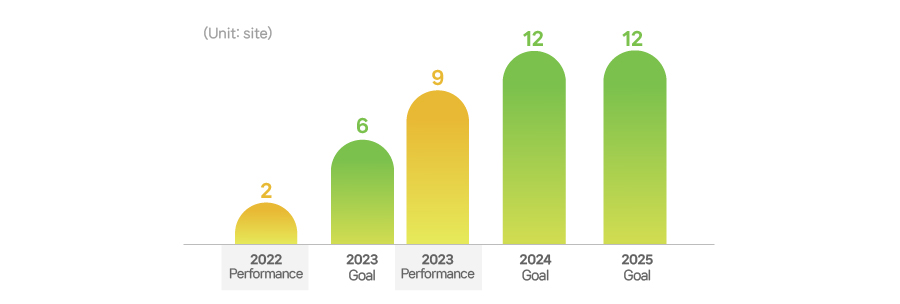
[Results and targets for number of platinum validated worksites]
The ‘Zero Waste to Landfill’ certification level is divided into Platinum (100%), Gold (95-99%) and Silver (90-94%), depending on the percentage of waste recycled, and serves as a global indicator of a company's resource recycling efforts. All six domestic operations and the Wuxi, Xi'an, and Vietnam subsidiaries have achieved the highest rating of Platinum, while other overseas operations have achieved Gold.
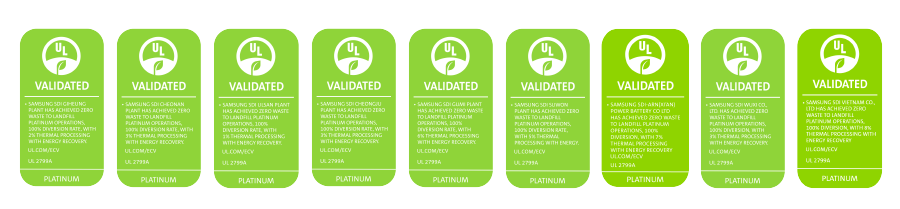
[Nine worksites earned Platinum Validations]
Reduce water consumption
To protect water resources, SAMSUNG SDI set yearly water reuse rate target of 80% by 2050. In 2023, we achieved 31% of water reuse rate, exceeding the initial target of 26%. This is an 8% increase from 2022. The introduction of an effluent reuse system at the Ulsan worksite contributed a lot to this result. After analyzing the end-of-pipe quality of effluents, we planned to expand the treatment facility and built a new effluent recovery line to reuse up to 2,000 m3 of effluents a day. This recovery line was also built with the pipes left unused within the worksite to save on investment expenses. Undertaking this task allowed our Ulsan worksite to achieve a year-on-year improvement of 39%p in water reuse while lowering its water withdrawal from nearby lakes in 2023.
SDIHU introduced ‘dry (electricity) discharging’ as an eco-friendly method for neutralizing the remaining charge of end-of-use batteries. Moving away from the conventional ‘wet (seawater) discharging’ approach to dry-discharging discarded batteries resulted in a tremendous reduction in the waste seawater generated. SDIHU developed the optimal ‘dry discharging algorithm’ for end-of-life batteries to enable full, safe discharging without causing the voltage to return to its high level. More than 90% of discarded batteries are currently treated with ‘dry discharging’ method.
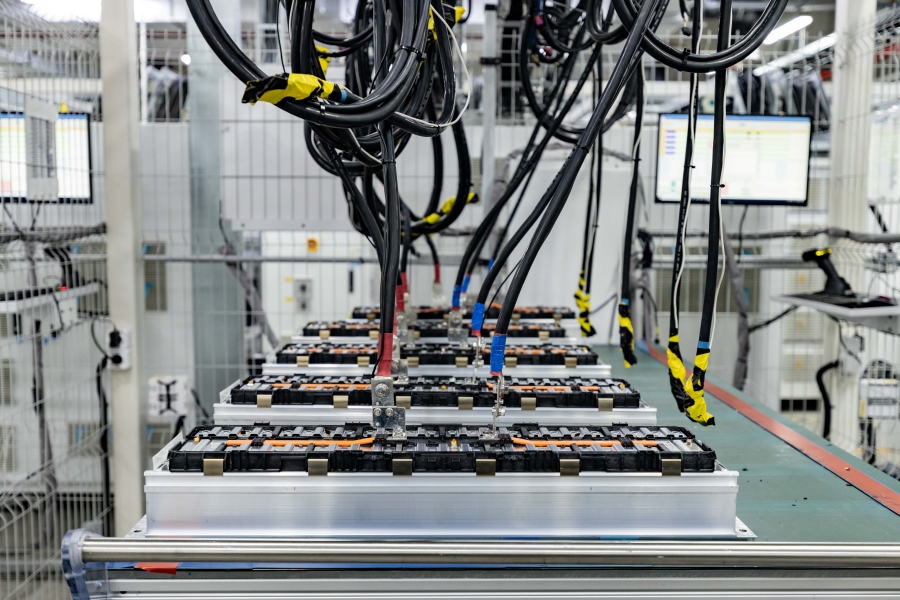
[Dry discharge]
In 2024, we plan to establish a new wastewater reuse system at the Cheonan worksite with a goal of a 39% water reuse rate and expand the wastewater reuse systems at the Tianjin and Xi’an operations.
Minimize the use of single-use products
To make zero use of disposable products, we replaced plastic water bottles, straws, plastic bags, and paper cups with alternatives made of metals or glass across our entire overseas operations by 2023. To ensure that stores operating at our worksites also use less single-use products, we started switching to reusable cups at the in-house cafe at our Giheung worksite and will gradually expand the use of reusable cups across our entire operations in 2024.
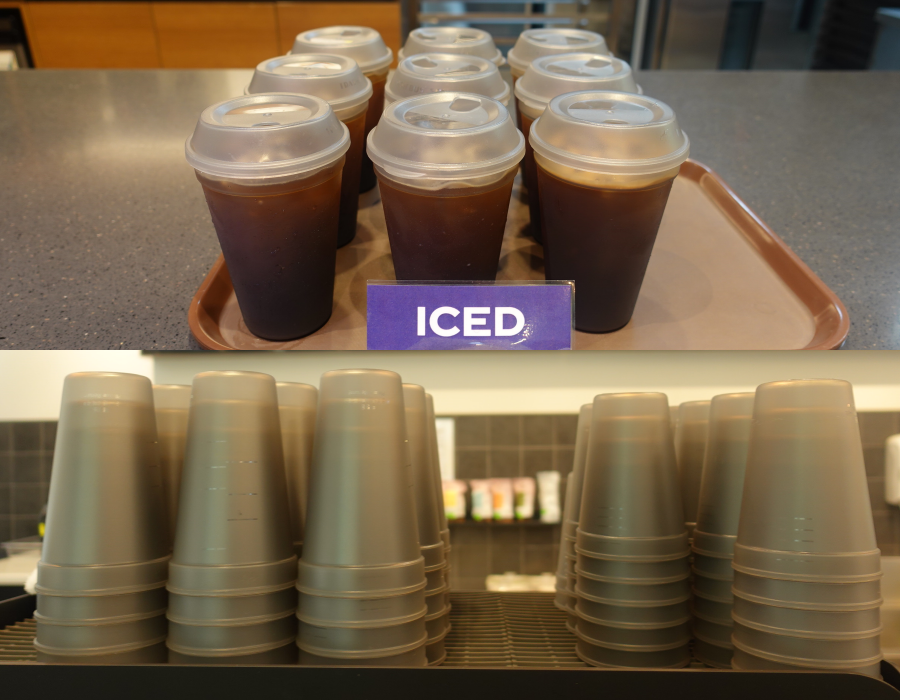
[Reusable cups at stores operating at our Giheung worksite]

SAMSUNG SDI Newsroom
We deliver the latest news and issues coming out of SAMSUNG SDI.