Technology & Products
[Battery101] Five Applications of ESS
2024.09.27
|
101[wʌ́nouwʌ́n] means basic knowledge of a topic or collection of introductory materials to a topic. Our Battery 101 series talks about all things battery: the history, technical aspects (basic principles and mechanisms), industrial aspects (IT, electric vehicles, ESS, etc.), and next-generation technologies that SAMSUNG SDI will innovate while opening up its future. Batteries have infinite potentials that exceeds our wildest imagination. Through Batteries 101 series, you will have a chance to see the entire spectrum of the battery's possibilities and to conjure SAMSUNG SDI’s pivotal role in it. |
Each application serves different purposes
Energy storage systems (ESS) look like a container, with a variety of components housed inside along with racks. In fact, they can take on various forms and functions depending on what they are intended for.
Energy storage systems (ESS) are utilized within power supply systems that include generation, transmission, and distribution. Electricity produced in power plants has alternating current and load fluctuations due to differences between what’s generated and what’s demanded. These power fluctuations can lead to frequency changes, affecting power quality. Using ESS for utility-scale applications helps level off these unwanted variations, thereby improving quality as well as stability of the grid.
ESS also plays a role by stabilizing variable power generation of renewable energy sources like solar and wind. For example, on sunny days, solar power generates excess electricity, while on rainy days, production may fall short. By storing the excess energy in ESS, the power grid is not affected by the weather, ensuring consistent power supply.
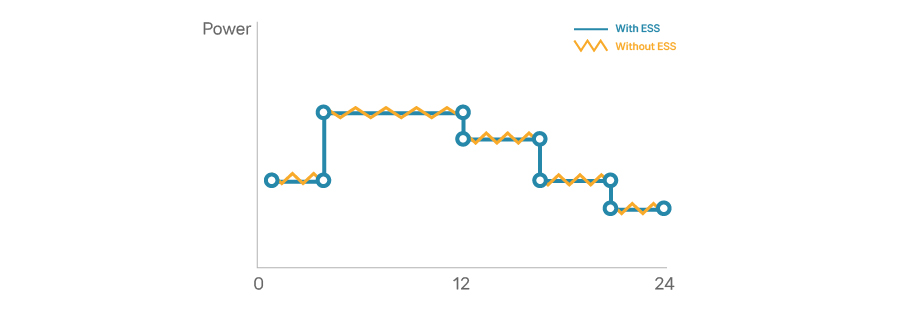
[ESS for utility solutions ensures grid quality stability]
Second, energy storage systems for commercial applications reduce costs by taking advantage of differing electricity rates. This is possible because commercial electricity has time-of-use rates. It is cheaper during low demand periods like spring and fall as well as late night hours (off-peak) whereas the rates go up during high demand periods like summer and winter, and during daytime (mid-peak) and evening hours (peak).
Electricity bills are calculated by multiplying the amount of power used by the rate of the time. Installing a commercial-use energy storage system can be cost-saving because the system is charged during low-rate times and used during high-rate times.
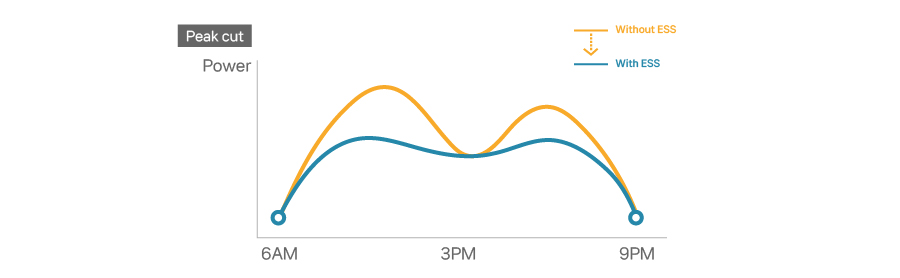
[ESS for commercial solutions saves utility bills avoiding peak-hour charges]
The batteries used in utility and commercial ESS solutions require high outputs, large capacity, and long lifespan.
Uninterrupted power supply systems (UPS) prevent outages by supplying short-term power during sudden outages so as to secure time for saving data and allow continued power operation until power is restored. Today, UPS plays a critical role because a power outage that causes data loss can result in substantial damage.
As a result, there are increasing cases of mandating installation of UPS systems to prevent significant losses due to outages. Hospitals and factories that operate 24/7 rely on UPS systems as well.
Batteries with features like fast-charging, long life, compact and light weight are preferred for use in UPS scale ESS.
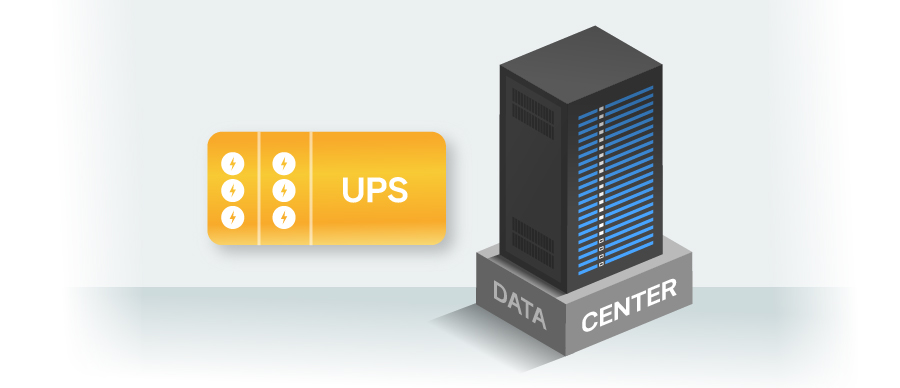
[UPS prevents losses during sudden outages]
ESS for residential applications minimizes electricity purchases at home by integrating with mainly solar power system. Through the system, users can store electricity generated during the day for later use. It is also useful in remote areas or isolated islands where power supply is not stable as stored electricity can be supplied during sudden outages.
In countries like Japan, where natural disasters are frequent, many households have installed ESS. In contrast, in Korea, where the power supply is stable, residential ESS solutions have not yet reached wider public yet. Recently, in the US, Australia or European countries that have a decent renewable energy power infrastructure and are more interested in renewable energy, residential ESS installation is becoming more common.
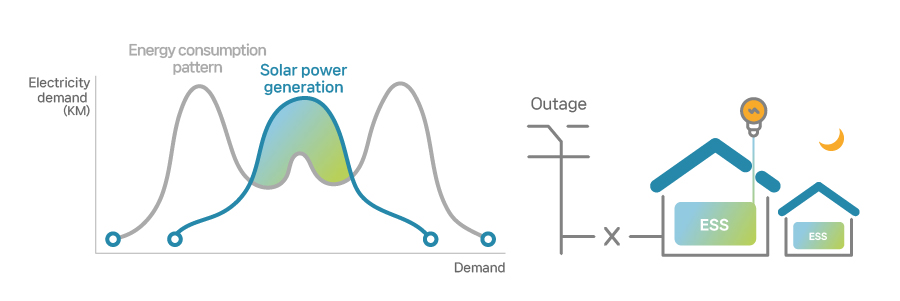
[Residential ESS stabilize renewable power generation and reduce electricity bills]
Last but not least, ESS solutions for telecommunications ensure stable power supply to base stations and support seamless networking environments. In areas with weak signals, power supply is often unreliable. Installing ESS in such locations enables smooth signal reception.
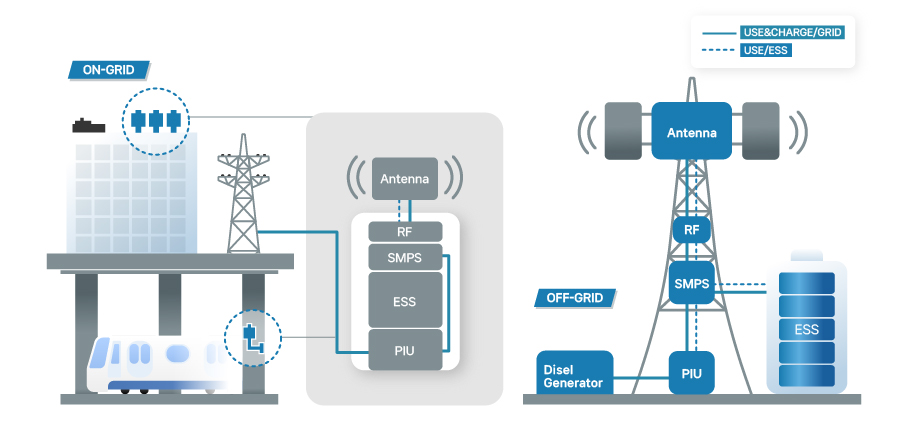
[ESS for telecommunciations: Ensure stable power supply and support networking environment]
Batteries used in residential and telecommunications ESS typically come in standardized battery racks. This offers advantages like easy installation and scalability, as well as compatibility with standard inverters, making maintenance much simpler.
Safety is the top priority
Energy storage systems which store energy to support our daily lives are also a key component in the era of renewable energy transition. As the ESS market grows, safety is becoming increasingly important. This makes safety standards and certifications even more essential. As a result, there is now a global trend toward strengthening related safety certifications.
Certifications are crucial as they assure that products, systems, qualifications, and services meet specified requirements. Given that product specifications and standards differ by country and region, getting certified by a reputable organization can be an onerous legal requirement for companies wishing to enter the global market. However, it can serve as a company’s vital asset that demonstrates its commitment to quality. Currently, battery-related certifications vary by country and region. In the US, the National Fire Protection Association (NFPA) has energy storage system regulations in place. Specifically, it mandates a minimum distance of 3 feet (91.4 centimeters) between battery racks to ensure safety. However, if an ESS product satisfies the UL9540A testing standards for energy storage system safety in its cells, modules and racks, the NFPA requirements can be waived. Accordingly, ESS companies undergo the UL9540A testing process themselves, because it also lets them apply various systems without additional fire-fighting equipment if the UL testing standards are met – a win-win for both battery companies and clients.
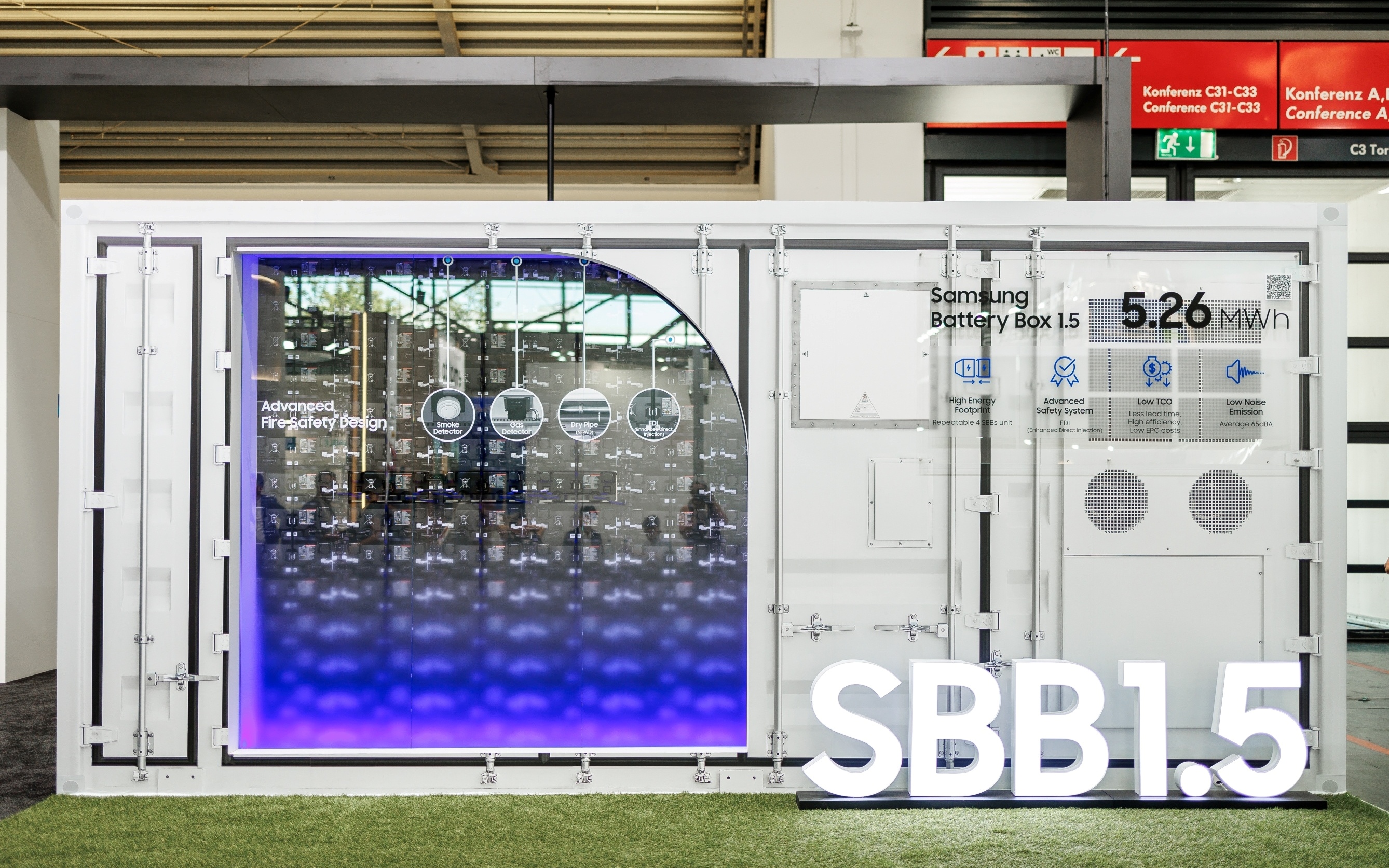
[SAMSUNG Battery Box – SAMSUNG SDI’s ESS battery solution embedded with special fire suppression system]
Putting aside certifications, ESS is built with fire detection and anti-propagation systems to enhance safety. SAMSUNG SDI specializes in an advanced safety system equipped with cutting-edge chemicals and thermal runaway blockers. This technology works to prevent fire spread to adjacent cells by instantly spraying fire extinguishing agents when a cell ignites. As ESS markets are expected to grow further, SAMSUNG SDI is making the best efforts to ensure safety through a myriad of measures in its products.
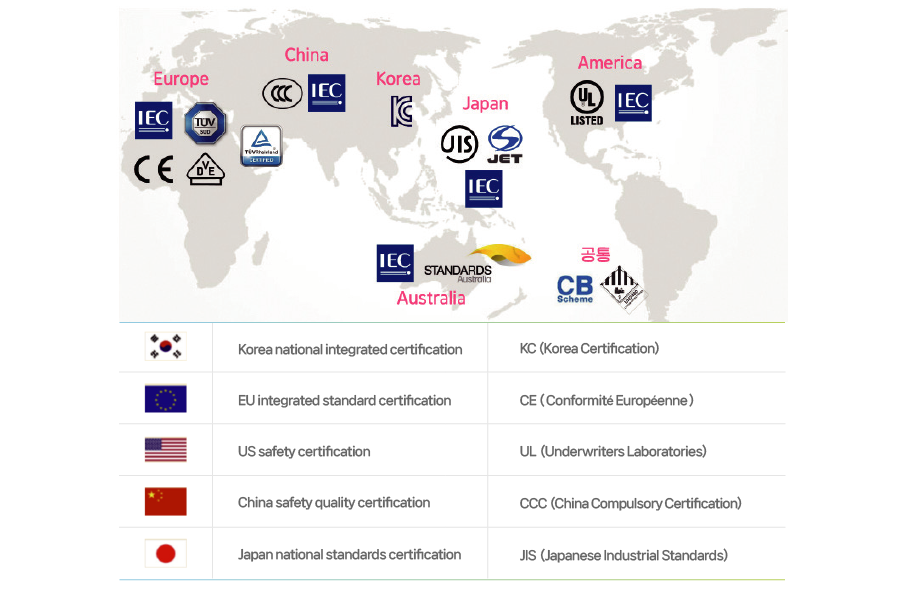
[ESS safety certifications by country]

SAMSUNG SDI Newsroom
We deliver the latest news and issues coming out of SAMSUNG SDI.